
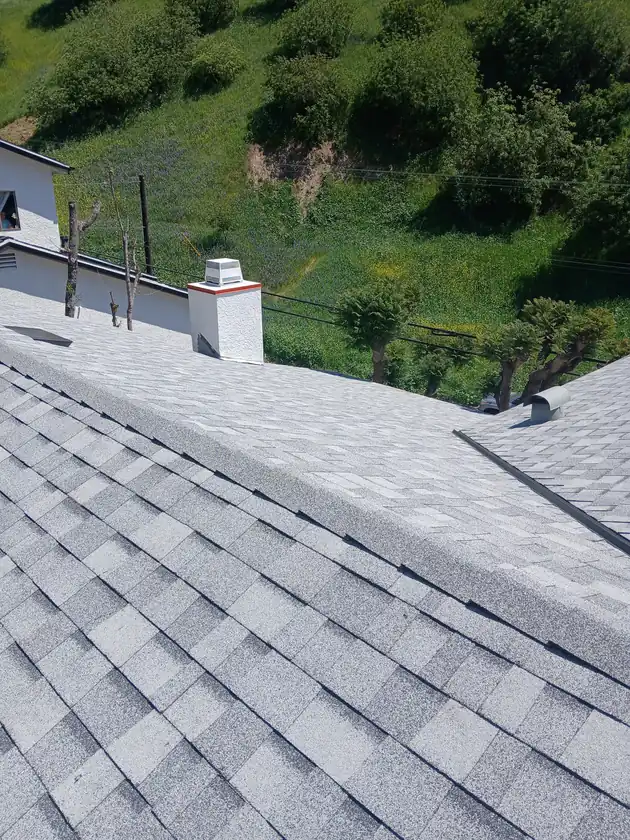
Many roofing calls start with a stain on a ceiling or a tile that has slipped out of place. What happens next depends on the covering, the layers under it, and how far the water has traveled. We look at all three of those before anyone starts talking about new materials.
We handle roof repair, full replacement, tile underlayment work and flat roof systems for Pasadena homes and buildings. Estimates are free, and the first call helps narrow down which of those jobs your roof actually needs.
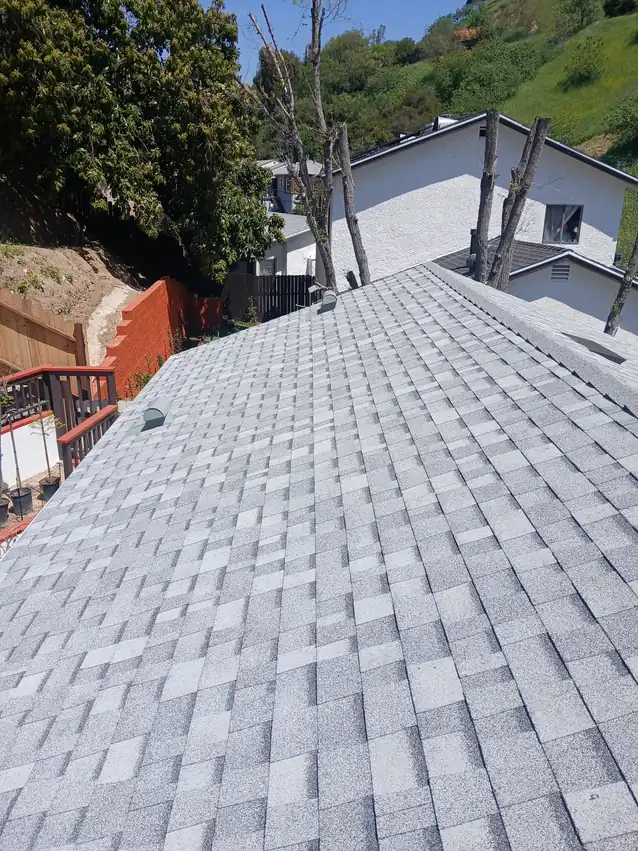
Roof condition before material decisions
A roof is an assembly, not one product. The covering you can see sits on underlayment, and that underlayment sits on wood decking. When water gets inside, any of those layers can be the reason.
The first question is never which material you like best, but what the roof is doing now. How much of it is still sound decides whether a repair or a replacement makes sense.
Underlayment is the waterproof layer that sits under tile or shingle and keeps water out. Tile can outlast the underlayment beneath it, so the fix may be new underlayment instead of new tile. That difference is worth knowing before you price out a whole new roof.
Decking is the wood that carries everything above it, from the underlayment to the covering itself. Rot in the decking is the most common change order on a roofing job. We look for soft spots and old stains early, because finding them late turns a quote into a surprise.
Flashing seals roof-to-wall joints, chimneys and valleys, and it is a leading source of leaks. A roof can look fine from the street while one flashing detail quietly lets water in.
We also count the layers already sitting on the deck, because that changes the available options. A tear-off strips all of them and puts the roof back to bare wood before anything new goes on.
Pitch matters as well, because a steep roof is slower and harder for a crew to work on. A low-slope roof depends instead on drainage that actually moves water off the surface.
Clues inside the building help too, so tell us what the ceiling or wall has been doing. A stain that grows during rain points somewhere different from one that has not changed in a year.
A first look on site is what settles the question of what your roof actually needs. Photos and maps are useful, but the layers under a covering only show themselves up close.
A free estimate prices the work we would do on the roof in front of us. A written roof inspection is a separate paid service, and it produces a report you can hand to somebody else.
On houses, the same checks drive our residential roofing work, from one slipped tile to a full tear-off. We would rather tell you the roof has years left than sell you a replacement you do not need.
We follow the same sequence on our Santa Clarita roofing jobs and on the work we do in Pasadena. The city changes the paperwork, not the way a roof fails or the way we look at it.
Repair and replacement choices
Repair and replacement are not two products to choose between, and the condition of the roof decides. The smaller job is sometimes the honest answer, and we will say so when it is.
We take small work. A leak, a few slipped tiles, a shingle patch or a failed flashing detail is ordinary roof repair. That work can buy real time when the rest of the covering is sound.
Repair has limits. When underlayment has failed across a whole slope, patching one corner only moves the next leak somewhere else.
A full roof replacement is a tear-off, which means the covering comes off down to the deck. We replace any rotted wood, lay new underlayment and install the new covering on the bare deck.
We back a full replacement with a ten-year workmanship warranty on the roof we install. That warranty covers our work on a complete roof, and it does not extend to a patch repair.
Tile sits between the two choices, and the work is a lift and relay rather than a tear-off. Our crews lift the tile in sections, strip the failed underlayment, replace bad decking and restack the same tile.
Whether the original tile goes back on depends on the condition of the tile. Some pieces break during a lift, so we tell you what we find rather than promising a result up front.
Flat and low-slope roofs get their own answer. Our default there is torch-down modified bitumen. The cap sheet we prefer is Polyglass Polyfresko G, a heat-welded granulated sheet with a reflective white surface.
Low slope is not the same as no slope, and water still has to leave the roof. So we check the drains and the path that water takes to the edge before we price anything.
Asphalt shingle work runs the full range, from a single patch to a complete tear-off and re-roof. Standing seam is the metal system we install.
On a standing seam roof the panels lock together at raised seams, and the fasteners stay hidden underneath. That hidden fastener detail matters more to the roof than the color anyone picks first.
New construction is separate work again, and it starts from drawings instead of an existing roof. When a builder sends plans, we quote the installation directly from what those plans show.
When both paths are real, we would rather quote both and let the numbers sit side by side. You get the repair number and the replacement number, then you decide which one fits the building and the budget.
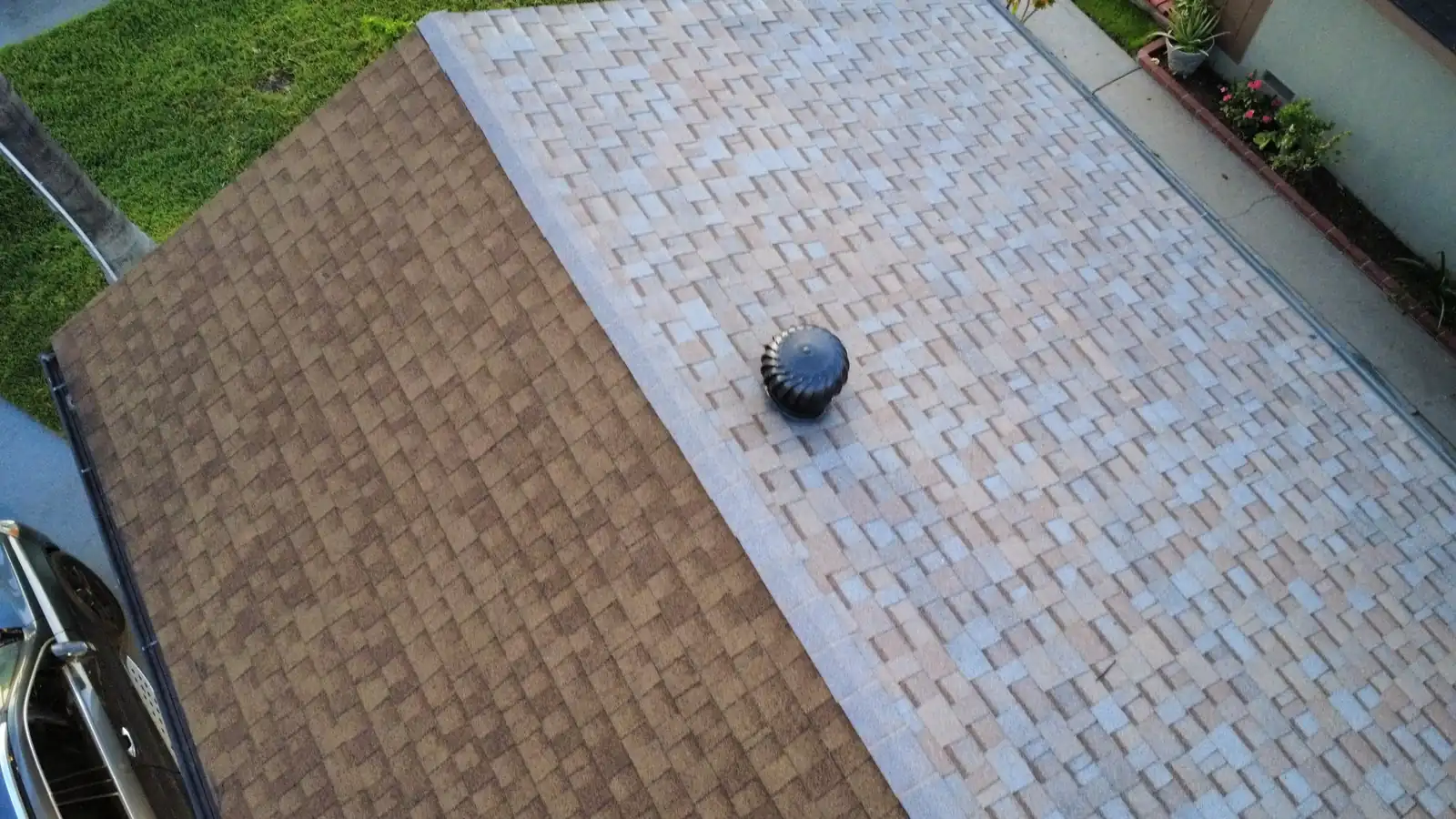
Confirming project-specific city requirements
Roofing rules are set locally, and the office that reviews your project decides what applies. Your exact address and your scope of work drive the answer.
Pasadena reviews building work through its own building and safety office, and that office answers project questions. The city's codes and regulations page lists the 2025 codes it adopted, effective January 1, 2026.
Pasadena's 2025 code amendment sets Class B as the general minimum for roof coverings. Its table also preserves stricter requirements for fire districts and the wildland-urban interface code. Class B does not satisfy every project.
Fire hazard mapping is parcel specific, so a city name alone never settles your status. Check Pasadena's fire hazard severity zones page for your exact address. We confirm which authority has jurisdiction before any paperwork goes in.
We help property owners pull the roofing permit a job requires, and we prepare what gets submitted. We cannot promise approval, a fee or a schedule, because the city decides all three. Ask early, because review timing belongs to the office and not to us.
Pasadena roofing coverage
We cover roof work across Pasadena. That includes single-family houses, multi-unit buildings and commercial properties with low-slope roofs.
Leak calls move first. We routinely offer same-day or next-day dispatch when water is coming into a building.
A first visit is a look and a plan, not a promise about what happens that afternoon. Whether we can finish the repair that day depends on the roof, the weather and the parts needed.
We do not assume what is on your roof before we look at it. Tile, shingle, metal and flat systems all need different work, and the estimate follows what is actually there.
Commercial buyers sometimes arrive asking about TPO, and we install it. We will also make the case for torch-down when that system suits the building better.
Escrow deadlines show up here too, and they come with their own kind of request. A buyer in contract needs the roof condition documented before closing, and that differs from a sales estimate.
An insurer may also ask for a roof inspection before renewing or writing a policy. That inspection is work we do, and the report is written for the party asking for it.
Rain sets the calendar in this part of Southern California, and roof work follows it. The first heavy storm after a dry summer is what turns a slow leak into a phone call.
Dry weather makes the work simpler, and it gives you room to decide without water on the floor. That is the argument for looking at a roof before the season starts.
We work under CSLB #1112525. When you call, you reach the people who handle the roofing.
Pasadena is one of the cities we cover, and our service areas page lists the rest. Work in one city does not change how we handle a roof in another.
Preparing a useful roofing inquiry
A short call goes further when you have a few details ready before you dial. Start with the property address, because that tells us which roof we are talking about.
Then tell us what you have noticed, even when the sign seems small or occasional. A stain on a ceiling, a tile out of place or a drip during rain each points somewhere.
Tell us how many stories the building has, and whether the roof is steep or close to flat. Both of those change the work, the access and the price we can quote.
If you know the covering, say so. Tile, asphalt shingle, metal and torch-down all behave differently, and the answer starts there.
We can measure a roof from satellite imagery and price the work from that measurement. The number comes from the actual area, so it gives you something real to plan against.
We still adjust on site, because a measurement from above cannot see through the covering. The layers under a covering only show themselves once someone is up there with the tile lifted.
Roofers measure in squares, and one square covers one hundred square feet of roof area. Area, pitch, stories, existing layers and rot in the decking all move the total.
Tile adds its own step, because the tile has to come off and go back on. That labor is part of why a tile job prices differently from a shingle job.
You will hear a few questions back from us during that first call. We ask about age, past repairs and what the roof has been through, because that shapes the estimate.
We may ask for photos later through another channel, once we know exactly what we are looking for.
Call even when the work is months away and nothing is leaking yet. We take those calls, and an early conversation is easier than a rushed one in the rain.
Nothing about a first call commits you to work of any kind. It is the quickest way to learn whether you face a repair, an underlayment job or a full replacement.
After the estimate, the decision is yours and the timing is yours as well. We would rather leave you with a clear number and an explanation than a sales push.
Questions we get about roof work
What affects the scope of roof work?+
Scope follows the roof itself. Area, pitch, the number of stories, the layers already on the deck and any rot underneath all change the job. Tile adds a step, because the tile has to come off and go back on.
Can I request a written roof report?+
Yes, and it is a paid service that is separate from the free estimate. Buyers in escrow ask for one, and so do owners whose insurer has requested an inspection. The fee depends on the size of the roof and the number of stories, so ask us on the call.
What information helps with a roofing estimate?+
The property address, the covering if you know it, and what you have noticed inside or outside. Tell us how many stories the building has and whether water is coming in now. We can measure from satellite imagery and follow up for anything else we need.
Call (661) 367-8211 to talk through your roof and set up a free estimate. You can also reach us through our contact page if you would rather write first.
Santa Clarita Roofing Contractors is a division of Home Vision Remodel.