
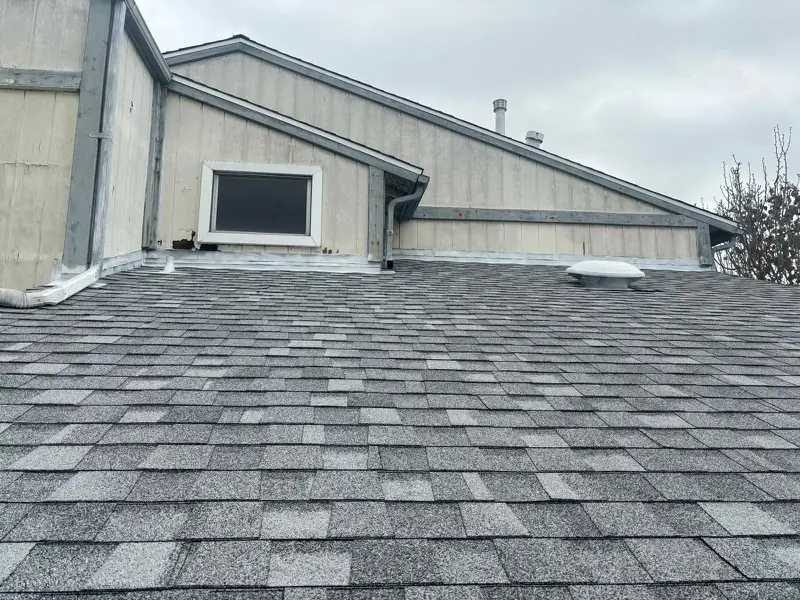
Replacing a roof is a big job, so it should start with proof and not a guess. We look at the covering, the flashing, and the leak history before we agree on a tear-off. Your estimate is free, and we explain what drives the price on your own roof.
We replace roofs on homes and commercial buildings across Santa Clarita, including Newhall, Valencia, Saugus, and Canyon Country. We judge each roof on its own condition and slope. What we find under the old layers can change the plan, and we say that before we start.
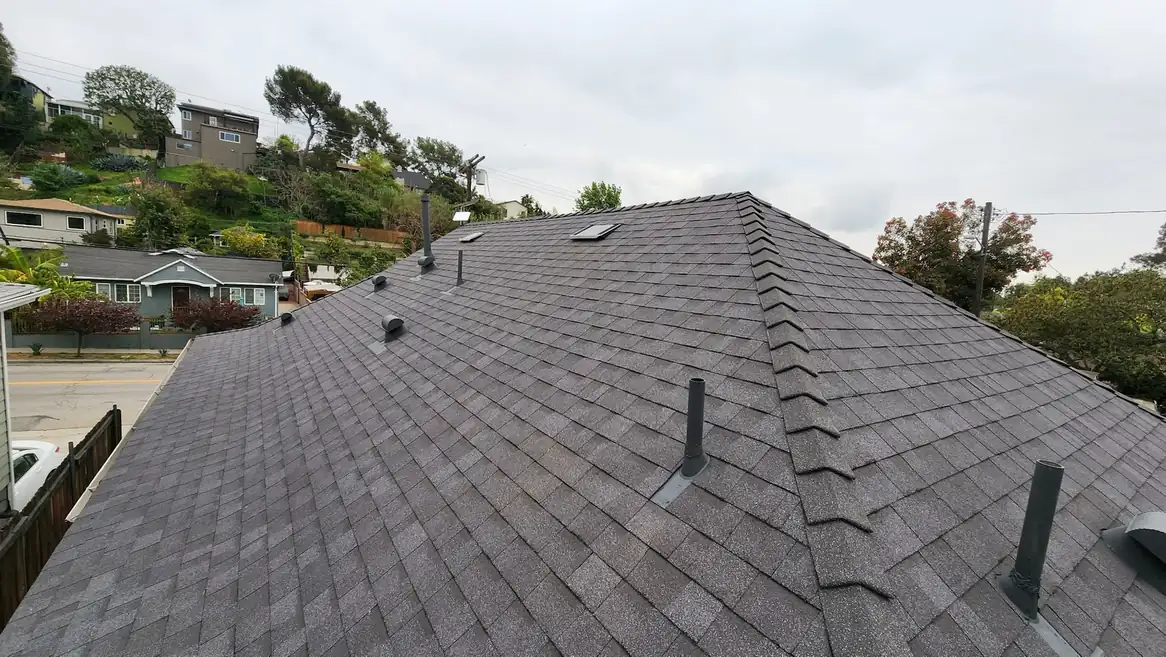
Deciding whether to replace an existing roof
Age by itself does not decide whether your roof needs replacing, and neither does a single ceiling stain. One worn valley or loose flashing can be repaired without touching the rest of the roof. Cracked covering across several slopes, soft decking, and repeat leaks in one spot point toward a tear-off.
When damage sits in one area, we will say so and quote a targeted roof repair instead. Our estimate names what we would strip, what we would keep, and what we would watch. We price from current satellite imagery, then confirm the scope on site before any work starts.
Buyers in escrow and owners whose insurer asks for paperwork need a documented roof inspection report. That report is a separate paid service, while the estimate for replacement work stays free. Replacement sits inside our wider Santa Clarita roofing work, so we can weigh it against a repair first.
Repair history tells us as much as the view from the street. Patches that keep failing in one spot can mean the underlayment below has given out. Underlayment is the waterproof layer under your tile or shingles, and it can fail while the tile stays sound.
Removing the covering and checking the deck
Tear-off means stripping the old covering down to the deck instead of laying new material over it. The deck, also called sheathing, is the layer of boards or panels under your covering. We cannot grade every board until the old layers come off and the wood sits open to daylight.
Visible conditions before removal
From the ground and the roof surface we can see broken tile, curled shingles, rusted flashing, and sagging lines. Those signs, your leak history, and any photos you have shape the scope we quote.
Satellite imagery gives us the roof area in squares. A square covers one hundred square feet, and it is how roofers measure and price the work. Slope, the number of stories, and the number of existing layers move that price as well.
Concealed conditions after tear-off
Rot in the decking is the most common reason a roof scope changes once work begins. We say that up front, so a change order does not land on you as a surprise. Santa Clarita's code requires us to repair or replace damaged deck or framing before new roofing goes on.
Older roofs sometimes sit on spaced sheathing, which is boards laid with gaps between them. The city's code calls for new solid sheathing over those gaps before the new covering goes down. The code also ties a reroof inspection to that point, after removal and before new roofing.
Choosing the replacement roof assembly
The covering gets the attention, but the underlayment and flashing decide how long the roof stays dry. We plan all three together, because a new covering over tired flashing still leaks at the chimney. Flashing is the metal that seals roof-to-wall joints, chimneys, and valleys, and it is a common leak source.
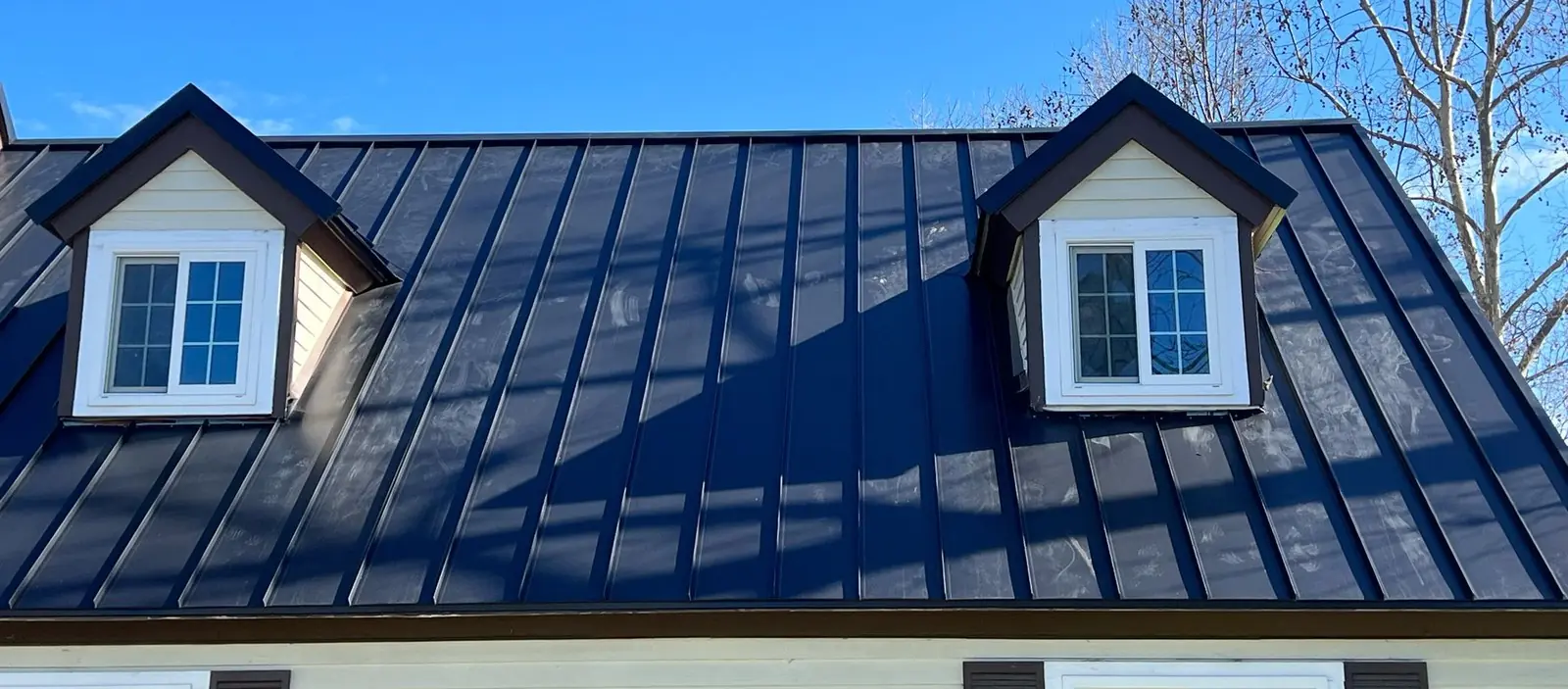
On sloped roofs we install asphalt shingles, tile, and standing seam metal panels with concealed fasteners. Flat and low-slope sections take a torch-down system, which is an asphalt membrane we bond with heat. Low-slope roofs still have to drain, so we plan the slope and the drain paths with the covering.
On tile roofs we may lift the tile in sections, replace the underlayment, and restack the same tile. Whether your tile goes back on depends on its condition, since lifting and handling break some pieces. We answer that when we scope the job.
Class A, B, and C are fire ratings for a complete roof assembly, not for one product. Outside the mapped fire hazard and wildland interface areas, the city's code sets at least a Class B covering. Inside a mapped fire hazard zone, stricter rules apply, so we check the parcel before we choose materials.
The city publishes its current codes and design criteria online, and we read them against your roof plan. Pitch, drainage, and the existing structure also limit which coverings fit your roof.
Roof replacement permits and project preparation
Whether your job needs a permit depends on the work and the property, and the city decides that. We help property owners pull the required roofing permit from the city with jurisdiction over the address. Approval, fees, and timing stay with the building department.
Santa Clarita routes applications, residential guidance, and questions through its Permit Center and online portal. We also keep a Santa Clarita permit and solar reroofing checklist that walks through the paperwork in order. It matters most when solar panels have to come off the roof and go back on.
The city publishes a residential policy for reroofing under an existing solar system. Under that policy a reroof permit applies, and a separate solar permit applies when the system itself changes. We handle the roofing scope, and the panel work belongs to your solar contractor.
Getting ready for an estimate is simple, and it starts with the property address. Tell us the structure type, any known leaks, and whether the roof has been patched before. Photos help when you have them, and we may ask for more once we look at the roof.
Call (661) 367-8211 when you want that estimate started at no charge.
Replacement scope and workmanship coverage
Two roofs of the same size can price very differently, and the reasons are easy to name. Squares, slope, the number of stories, and the layers we remove all move the total. Rotted decking, tile that comes off and goes back on, and a mapped fire hazard area do the same.
The estimate is free, and it spells out the scope instead of one bare number. We also flag where the scope could change once the old roof comes off. You can call with that estimate in front of you and ask why any line is there.
Full-replacement workmanship coverage
We give a ten-year workmanship warranty on a full roof replacement. Workmanship coverage is about how we install the roof, not about the products themselves. That term applies to full replacement work, so ask us what applies when the job is a repair.
Questions about product coverage
Manufacturers publish their own coverage for shingles, tile, metal panels, and membranes. Those terms come from the maker, and they depend on the product line and the installation. Ask which product we are quoting, and we will point you to the maker's current terms.
Questions before a reroof
A bid is easier to compare when every roofer answers the same short list of questions. Ask what comes off, what goes back on, who pulls the permit, and how deck repairs are priced. Those answers tell you more about a bid than the total at the bottom.
The estimate should name the underlayment and the flashing, not only the shingle or tile. Deck repairs stay an estimate until the old covering comes off, since the boards sit hidden beneath it. We agree on how we measure and price that work before we start.
A full replacement is not the only answer, and we will tell you when it is not. On tile, new underlayment under sound tile can stop the leak without a new covering. On a shingle roof with one failing slope, a smaller repair may hold for now.
Fire zone rules apply to mapped parcels, not to the whole city. Our Santa Clarita Class A roof and fire zone screening table shows how to check an address. That check belongs before material choices, because it can change the assembly you need.
New construction is different work, since the first roof goes on a new deck with plans behind it. Send us the plans and we will quote that job on its own.
Common questions about replacing a roof
What can change after the old roof comes off?+
Hidden deck damage is the most common reason a replacement scope changes. Santa Clarita's code requires us to repair or replace damaged deck or framing before the new roof goes on. Older spaced sheathing may also need new solid boards.
What workmanship coverage applies to a full replacement?+
We give a ten-year workmanship warranty on a full roof replacement. It covers our installation work, and it does not stand in for the manufacturer's product terms. Ask us what applies before you sign, since repair work is quoted on its own terms.
Can usable roof tiles be kept?+
That depends on the tile itself. We lift tile in sections, replace the underlayment beneath it, and restack the same tile when condition allows. Some pieces break during lifting, so the estimate accounts for replacement tile.
Call (661) 367-8211 for a free roof replacement estimate in Santa Clarita. We price the job from current imagery, confirm it on site, and put the scope in writing. You can also send your roof details through our contact page.
Santa Clarita Roofing Contractors is a division of Home Vision Remodel. Our roofing contracts run under CSLB #1112525.