
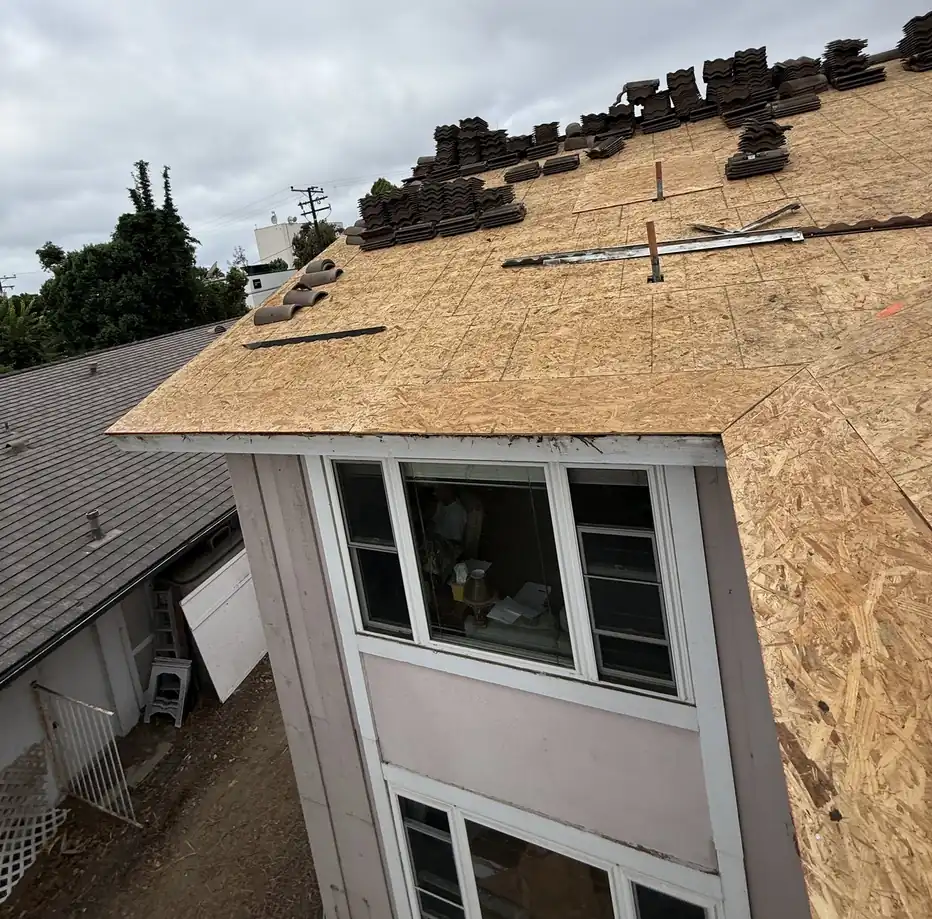
A home roof problem does not announce whether you need a repair or a full replacement. We start by finding where the water enters, then check the condition of the covering and decking. Those findings decide whether a targeted repair makes sense, or whether the whole roof should come off.
Roof work on an occupied house also has to fit around the people living inside it. We can talk through access, noise and what happens if we find damage under the covering. Call (661) 367-8211 when you want an estimate, and we will answer your questions first.
Choosing the next step for your home roof
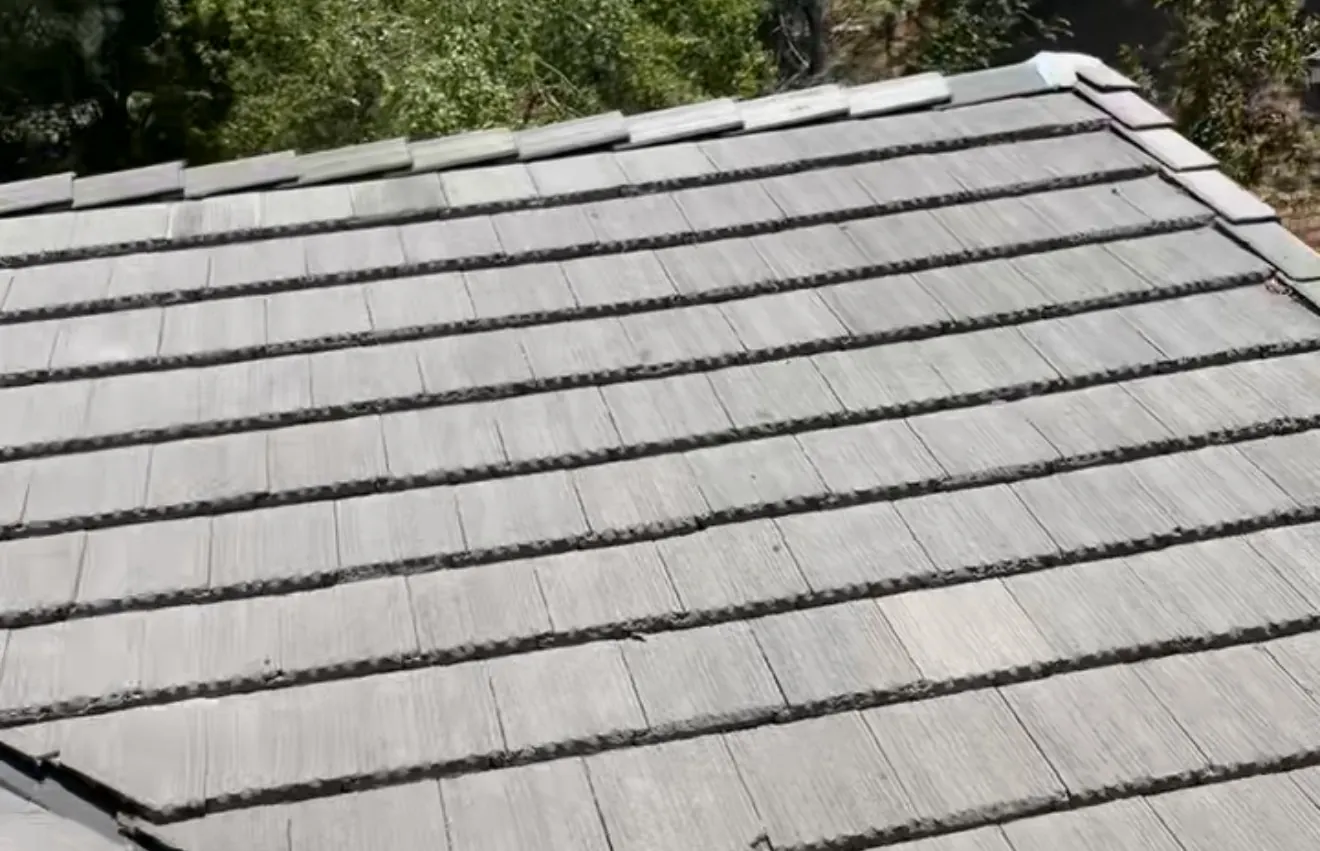
How much of the covering has failed is the first question, and the deck below is the second. Damage around one vent or valley is a different job from a roof that leaks in several places.
When damage stays in one area, a roof repair can keep the rest of the roof in service. When the covering is worn across the whole surface, a roof replacement puts one new system on the house. A full replacement carries our ten year workmanship warranty, and repairs do not carry it.
Some buyers in escrow and some insurers ask for a written report on the roof condition. That roof inspection report is a separate paid service, and its fee depends on roof size and stories. Whichever one you need, our Santa Clarita roofing services start with the same look at your roof.
Leaks, damaged coverings and underlying conditions
Leaks bring more callers to us than any other roofing question. A stain on the ceiling tells you water arrived there, but it does not name the failure. Water can travel along the decking or a rafter before it shows up inside the house.
Tell us what you can see safely from the ground or from a window. Slipped or cracked tiles, curled shingles, loose flashing and damp spots all help us plan the visit. Please do not climb up to check; we would rather look at it ourselves.
Under the covering, the underlayment is the layer that keeps water out. On a tile roof the underlayment can fail while the tile itself stays sound. So we lift a section of tile and check that layer directly.
Roofing work around an occupied home
A tear off takes the old covering down to the deck, so expect noise and debris while it happens. We need room to stage the new material and to load the old covering out. Tell us where cars park and how our crew can reach the roof on your property.
Move anything fragile near the walls before we start, such as planters, lights and patio furniture. Let us know about pets, gate codes and anyone who sleeps during the day.
Rot in the decking is the most common reason a roofing estimate changes partway through. We show you the damaged wood before we replace it, and we explain what it changes. Ask us anything while we are on site; we would rather answer than leave you wondering.
Comparing roof materials for your house
We install asphalt shingle roofs, tile roofs, standing seam metal and torch down flat systems. We explain those differences and let the condition of your roof guide the material.
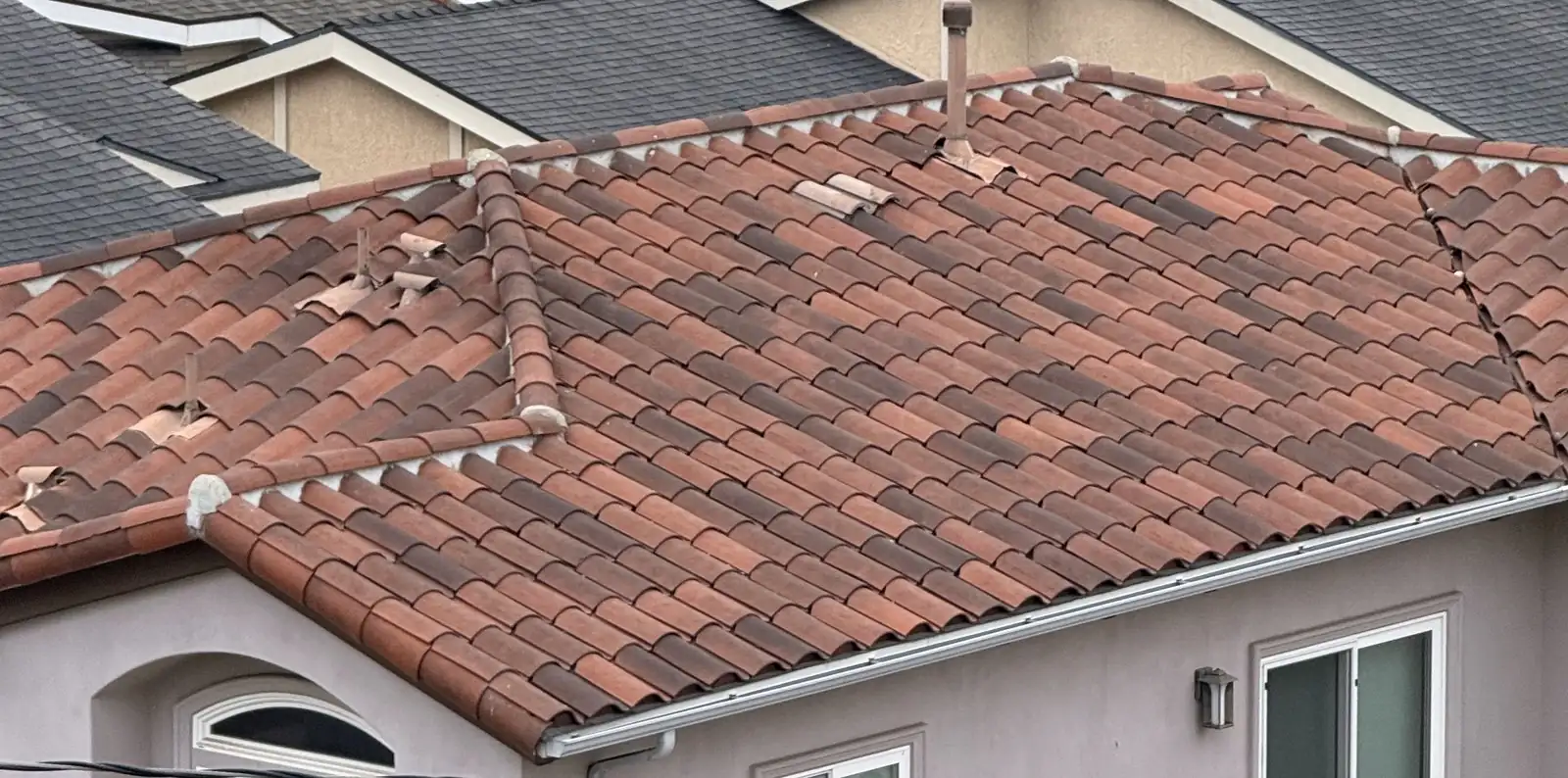
When your tile is still sound, we can lift it, replace the underlayment and restack the same tile. Roofers call that lift and relay, and it reuses the tile you already have. Whether we can reuse it depends on the condition we find once the tile comes off.
Standing seam metal joins panels with raised seams and concealed fasteners, so nothing pins through the surface. Low slope sections need a system built to drain, and we use torch down modified bitumen there.
Wood shake raises separate questions, since fire hazard mapping can affect what a specific property may use. You can read the city's building codes and design criteria before you decide on a covering. We check what applies at your address before we recommend a material.
Understanding a residential roofing estimate
Cost is the first question we hear, and an honest answer starts with the scope of work. We quote from the number of squares, the pitch, the number of stories and the existing layers. A square is one hundred square feet, which is how roofers measure and price a roof.
Our estimates include an allowance for tile breakage, and we explain the rate for wood damage beyond it. If we open the roof and find rot, the price changes, and we show you why before we continue. The estimate itself is free, and we will walk you through each line in it.
Some roofing work needs a permit, and we help property owners pull the required permit from the city. The City of Santa Clarita runs a permit center that explains its current process and forms. We cannot promise approval, timing or a particular result, since the city decides what your project requires.
Questions homeowners ask us
Can I ask about a repair as well as a replacement?+
Yes. Tell us what the roof is doing, and we will price the repair, the replacement, or both.
What details help with an estimate?+
The property address, the roof type, what you are seeing and when it started all help. We can start from satellite imagery, and we confirm details at the property when the job needs it.
Is a roof inspection report a separate service?+
Yes. The estimate for roofing work is free, while a written inspection report is a paid service. Its fee depends on the size of the roof and the number of stories, so call us for yours.
Tell us what your roof is doing, and we will tell you what it needs. Call (661) 367-8211 for a free estimate, or send us a message through our contact page. We work under CSLB #1112525.
Santa Clarita Roofing Contractors is a division of Home Vision Remodel.