
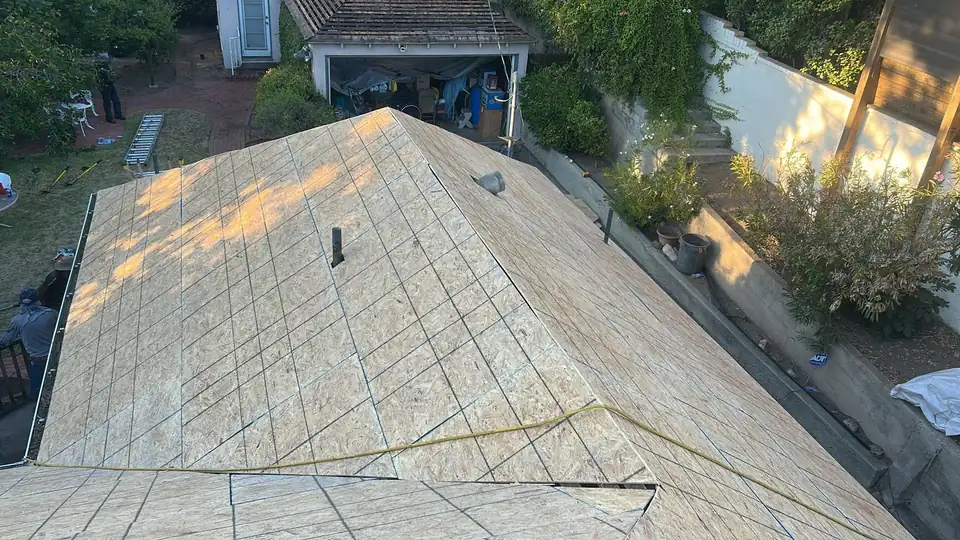
Water inside the building is what turns a commercial roof into a problem you have to solve. A stained ceiling tile, a damp wall or a puddle by a column raises the same question. Where is the water getting in, and what will it take to stop it?
We work on low slope roofs for offices, shops, retail units and multi unit buildings around Santa Clarita. Tell us what the roof is doing, and we will sort the repair, the reroofing and the paperwork. The estimate for the work itself is free, whatever the roof turns out to need.
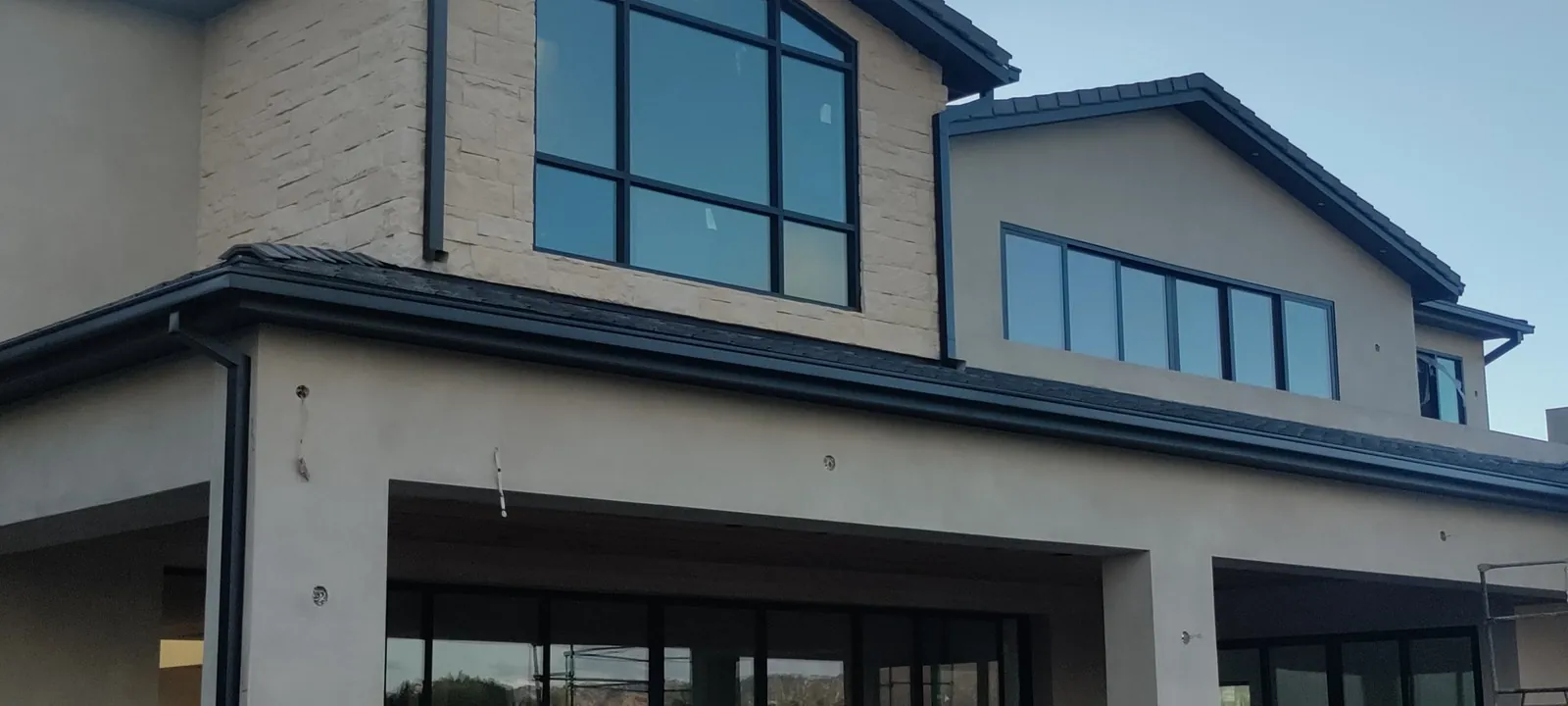
Define the commercial roof problem
On a commercial building, we split the roof question into repair, replacement and the documentation a deal may need. Each one asks something different of your building and budget, so taking them in order keeps the decision honest.
A leak at one seam or one flashing may be a job for targeted roof repair. A covering that has failed across the whole surface points toward a full roof replacement. We would rather tell you which one you have than sell you the bigger job.
The third question is about paperwork rather than an active leak on the roof. A buyer, a lender or an insurer may ask for a documented roof inspection before a deadline. That report is a paid service, and it is separate from the free estimate for repair work.
Commercial covers more than warehouses, because small offices, shops, retail strips and multi unit properties share low slope questions. What changes is who owns the roof, who uses the building and who has to approve the work.
We work under CSLB #1112525, and the same team handles roofing across Santa Clarita on homes as well. Santa Clarita Roofing Contractors is a division of Home Vision Remodel. Call (661) 367-8211 and tell us what the building and its roof are doing.
An active leak needs somebody on the roof while the water is still moving and visible. We offer same day or next day dispatch on active leaks when the day's schedule allows. A first visit may stop the water, or it may only show what the full repair involves.
A roof that has been patched several times tells a longer story than one wet spot. We look at how those patches were made and whether the covering under them still holds. That history shapes whether more repairs make sense on your building, or whether replacement is the better call.
Tell us what you have seen inside the building, when it started and how often it happens. Photos, old invoices and roof plans help us picture the property, though we confirm the condition on the roof.
Low-slope roof systems and condition
A low slope roof works as a sealed surface, not as shingles that shed water fast. The covering has to stay watertight across the whole roof and its seams, so its condition decides your options.
Our standard low slope system is torch down modified bitumen, a rolled asphalt sheet heated into place. The top layer is a granulated cap sheet, and it takes the sun and the foot traffic. One product we use there is Polyglass Polyfresko G, a granulated cap sheet applied with heat.
TPO is a single ply plastic membrane, and its sheets are joined with hot air welds. We install TPO, and we will also say where a torch down roof may suit the building better. Our TPO roofing page sets the two systems side by side in more detail.
We weigh what a future repair will take, because a welded membrane patch needs the right material and heat. A cap sheet repair works with what is already up there, using the same kind of sheet.
Before we price anything, we walk the roof and read the condition of the covering. We look at the cap sheet surface, at open laps and blisters, and at soft spots underfoot. A lap is the overlap where two sheets meet, and it is a place we always check.
The deck under the covering matters as much as the surface you can see on top. Soft spots underfoot can mean wet insulation or damaged sheathing, which is the structural board beneath. Our flat roofing page explains how these layers are built up over the deck.
Age alone does not decide the state of a low slope roof on a commercial building. A sheltered roof that drains well can outlast one that bakes in the sun and holds water. We assess each building on what we find up there, not on the year it was built.
When a new layer can go over the old one, we say so in the estimate. When the old covering has to come off, we say that before the price is set. A full roof replacement from us carries a ten year workmanship warranty on our work.
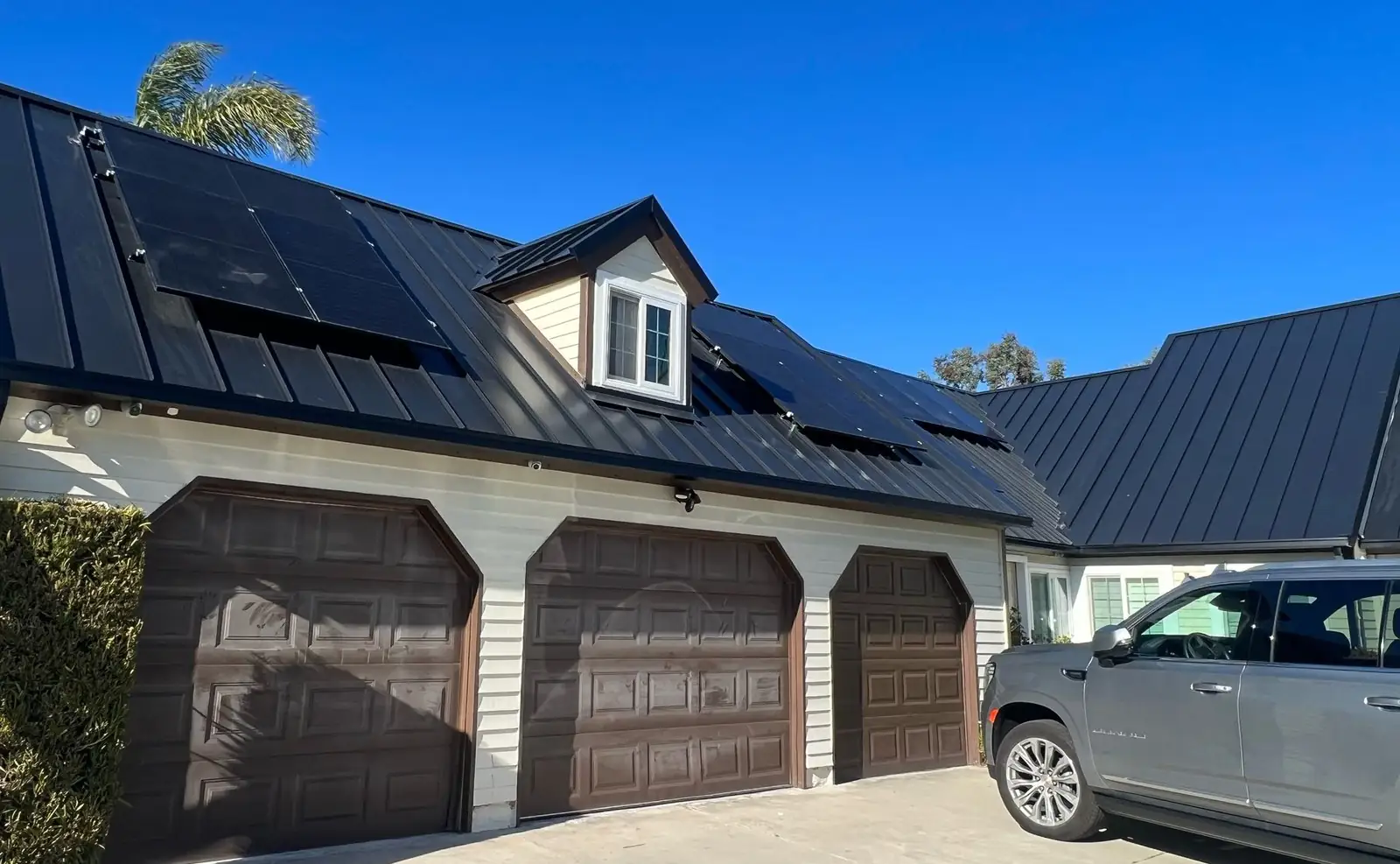
Drainage, seams and roof penetrations
A low slope roof must still drain, so it is built with fall toward drains, scuppers or an edge. A scupper is an opening at the parapet wall that lets water off the roof.
Water still standing days after the rain is a signal, not a normal state for the roof. It can mean a blocked drain, crushed insulation or a low spot in the deck. We note where it sits, how deep it gets and how long it stays there.
Drains and scuppers only work while they are clear, and leaves, grit and wind blown trash gather around them. We check the bowls and strainers whenever we are up there for other work.
Seams are where two sheets of roofing meet, and water tests every one of them. Torch down laps are welded with flame, and TPO seams are welded with hot air. An open seam gives water a path into the insulation and the deck below.
Every pipe, vent, curb and skylight that passes through the roof is a sealed hole. Roofers call these penetrations, and the flashing around them is a leading place for leaks. Our work covers that roof side detail: the flashing, the curb and the covering around it.
Parapet walls, roof edges and wall transitions take their share of water as well. Metal edge flashing and base flashing seal those joints where the roof meets something vertical. A leak there can look exactly like a roof leak when you are standing inside the suite.
Rooftop units, vents and mounts also bring regular foot traffic onto the covering around them. Service crews walk the same path each visit, so we look for that wear before water appears.
If the water problem comes from how the building was built, we will tell you plainly. Some fixes belong to the roof itself, and some belong to the structure sitting under it. We stay on the roofing side of the work and keep that line clear for you.
Planning work with a property manager
A commercial roof sits on a working building, and the job has to fit around that work. Before we price anything, we ask about access, occupancy and the roof's own repair history. Those answers change our crew size, the staging and the order the work runs in.
Torch down work uses open flame, and membrane welding uses heat, so we plan around your building. Roof work can be noisy, and hot asphalt can carry a smell over occupied suites. We tell you what the work day will look like, so you can give tenants notice.
Material has to land somewhere, and the old roofing has to leave the property. A dumpster, a delivery spot and a clear path matter as much as the roof does. Where the site allows it, we stage the work in sections to keep part of the lot open.
The person who reports a leak is not always the person who approves the spending. Tell us early who needs to see the scope, and in what form they want it. We can put the proposed work, the materials and the price in writing for that reader.
Some roof work needs a permit, and that depends on the building and on the scope. We help owners and managers pull the required roofing permit from the city concerned. Santa Clarita runs its own permit center for applications and for building guidance.
Permit timing and fees belong to the city, so we do not quote either one. We can help pull the permit the work requires, which keeps the roof job and its paperwork together.
Weather sets part of the schedule, because heat applied roofing wants a dry deck under it. Winter is the wet season here, so earlier planning leaves you more room to choose. We plan around the current forecast rather than promising you a date we cannot hold.
Have these details ready before we price the job:
- How our crew reaches the roof: an interior hatch, a fixed ladder or a lift in the lot
- Which tenants sit under the work area, and what hours suit them
- Whether the property is one unit, a multi unit building or an office suite
- What has leaked before, and what was done about it
- Any roof plans, past invoices or warranty papers you still hold
- Who signs off on the scope and the cost
Reports, estimates and a proposed scope
Two different documents get called an inspection, and the difference shows up on your invoice. One is a free estimate for work we would do, and the other is a paid written report.
A free estimate for roof work
Our estimate for roof work is free, whether it ends in a small repair or a full reroof. We can start from measurements and satellite imagery of the roof before anyone climbs up. We adjust the number once we are on the roof and can see the surface and the deck.
We cannot post a price for a commercial roof, because size and access drive the number. Square footage, the number of stories, the layers in place and the deck condition all move it. Conditions we find on the site can move the number again once the work is underway.
Where the building sits can change what the roof assembly above it has to be. The city lists site conditions such as fire and flood, and it points owners to its maps. A single parcel still needs checking rather than a citywide assumption about the roof.
Its building safety pages publish the current codes and design criteria for roofing work. We read those published requirements against your scope instead of guessing from the address alone.
A paid written roof report
An escrow file or an insurer's request may call for a documented report rather than a bid. That report is a paid service, and the fee changes with roof size and building height. Call us for the current figure before you schedule the report on your building.
The report sets out what we found and the condition of the roof on that date. How a buyer, a lender or an insurer reads that report stays their own decision. Not every sale or renewal asks for one, so check what the other side requires.
Either route ends with a written scope that you can hold us to later. It names the work, the materials and what happens if we open the roof and find bad decking. Damaged decking is the change order we run into most, so we raise it before our crew starts.
Questions about commercial roof work
Can a commercial roof be assessed for repair?+
Yes, we start by checking whether the trouble stays in one area, such as a seam or a drain. Where it stays local, a targeted repair may hold the water out without a full reroof. Where the covering has failed broadly, replacement is the honest answer, and the estimate is still free.
What roof information should a property manager provide?+
Give us the property address, the building type and who occupies the space. Add the leak history, any past roof invoices or plans, and how we reach the roof. Tell us who approves the scope and the cost, so the estimate reaches the right desk.
Is a written report different from an estimate?+
The estimate prices the work we would do on your roof, and it costs you nothing. The written report documents roof condition for an escrow file or an insurer. It is a paid service, and its fee depends on roof size and stories.
Tell us what the roof is doing and we will take it from there. Call (661) 367-8211 to talk it through, or send the details through our contact page. The estimate for the work is free, and a written report is quoted on its own.