
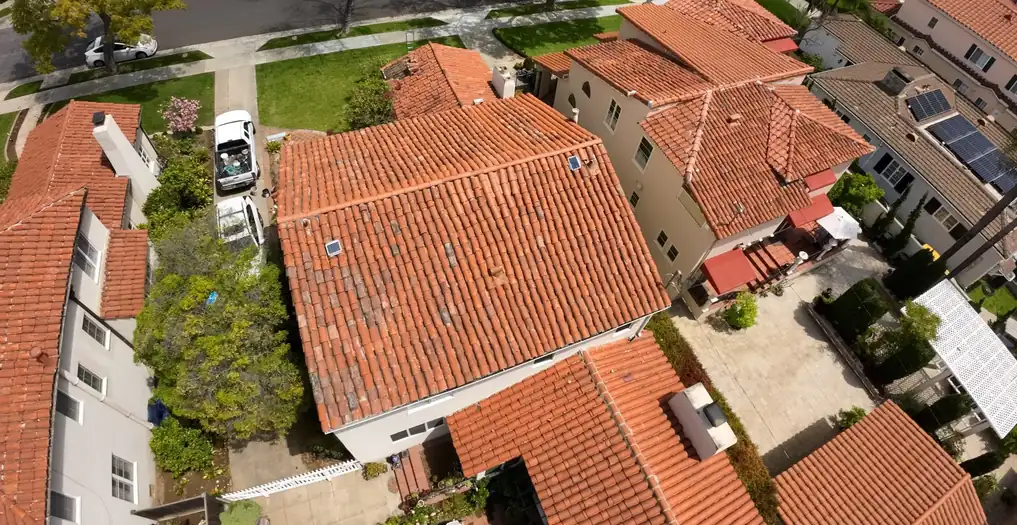
Tile roof underlayment is the water resistant layer between your roof tile and the wood deck below. The tile sheds most of the rain, and the underlayment handles what blows or seeps past it. That layer is hidden from the ground, so a ceiling stain is sometimes the first sign of trouble.
Replacing worn underlayment does not always mean paying for a whole new roof. We lift the tile off in sections, replace the layer beneath it, and repair damaged decking. Tile that comes through in sound condition can go back on the roof.
What underlayment does beneath roof tile
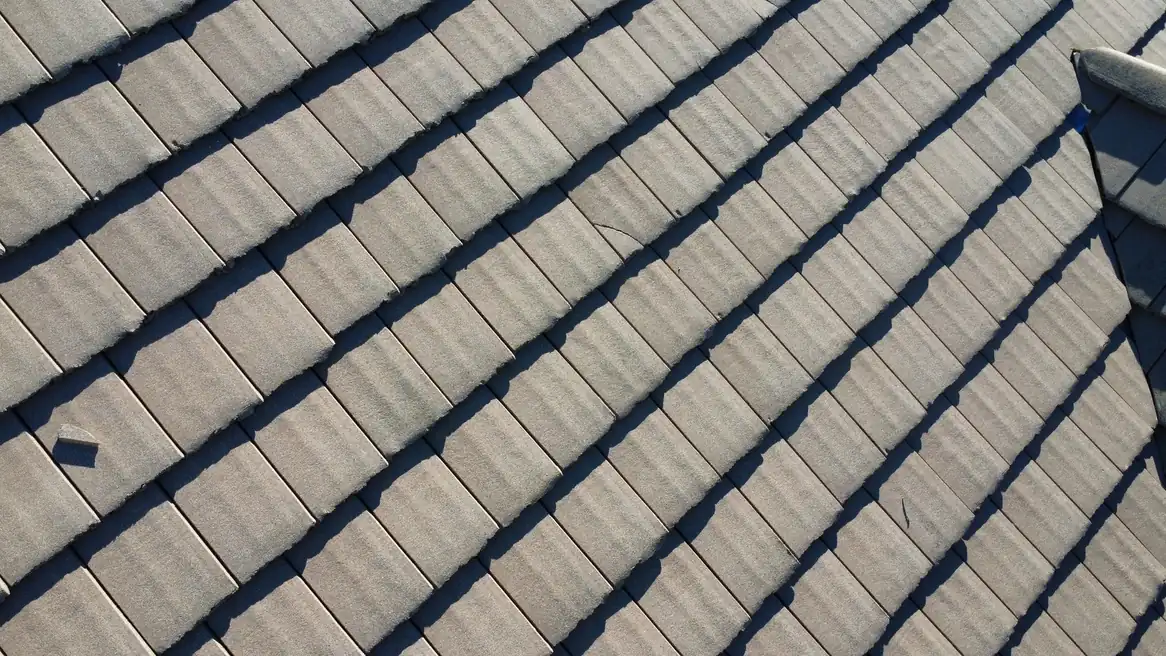
A tile roof works as a system, and the tile is only the outer part of it. Clay and concrete tile shed rain, block sun, and protect the softer material underneath. The underlayment carries any water that slips past the tile down the slope and off the roof.
Wind driven rain, wet debris, and cracked tile all let some water through. That is normal, and the layer below is what keeps it out of your ceiling. When the sheet tears, dries out, or pulls loose at the nails, water has a path inside.
You cannot see the underlayment from the ground, so age alone will not tell you its condition. A roof inspection that includes lifting a few tiles gives a clearer read on the layer below. Tile is part of our Santa Clarita roofing work.
Tile and underlayment do not wear at the same rate, and each roof ages on its own terms. Sun, slope, and past repairs all change what we find under the tile. If you are unsure what shape yours is in, call us and start with a free estimate.
Why a tile roof can leak
A wet spot on the ceiling tells you water got in, but it does not tell you where. Water can travel along rafters or across the top of the deck before it drops through. So we trace the path back uphill instead of opening the first spot we see.
Worn or torn underlayment is one possibility, and flashing is another. Flashing is the metal that seals a roof to walls, chimneys, and valleys. Those joints take a lot of water, and a failed seal there can look just like a bad sheet.
Broken or slipped tile is a third cause, and foot traffic or a falling branch can do it. Debris in the valleys can dam water and push it sideways under the tile. Each of these needs a different fix, so the repair starts with finding the real source.
Age is not proof of failure either, and a young roof with bad flashing still leaks. We look at the attic side, the deck, and the tile field before we name a cause.
What happens during tile lift and relay
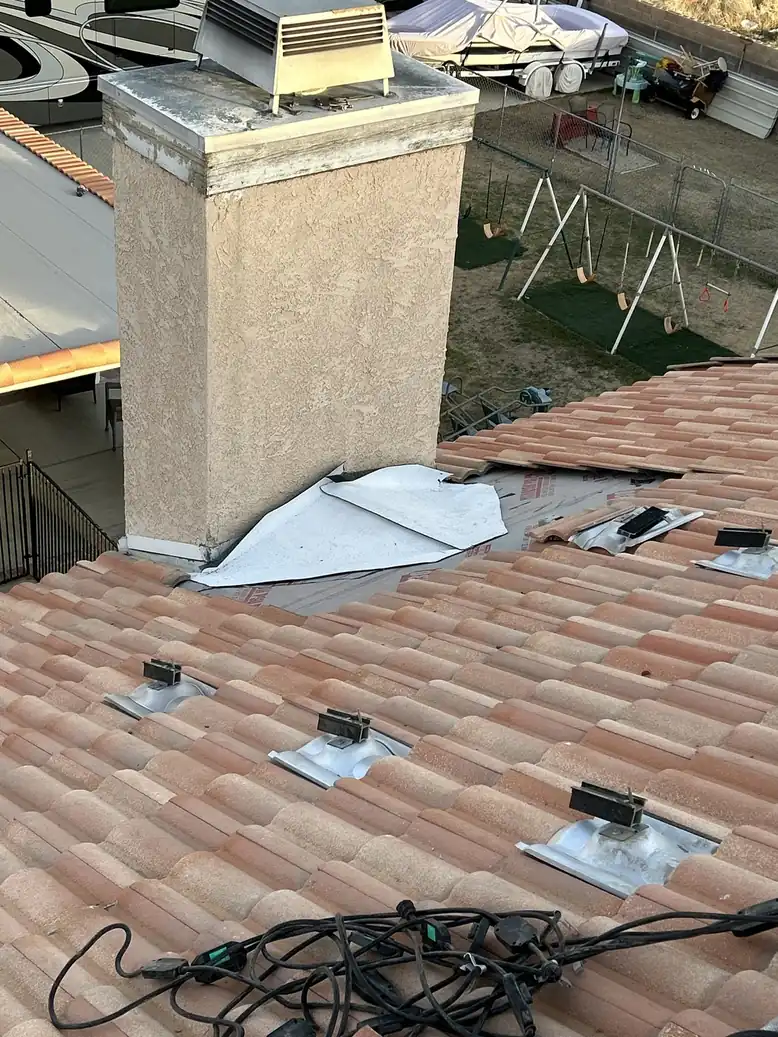
Lift and relay is the trade name for replacing underlayment while keeping the tile you already own. The tile comes off in sections, the old sheet goes to the dump, and new material goes down. Tile is heavy and brittle, and the work happens on a slope, so we keep homeowners off the roof.
Removing and checking the existing tile
We start at one section, lift the tile by hand, and stack it where it stays stable. We sort as we go and set cracked or chipped pieces aside instead of putting them back. Some breakage comes with the job, so we plan for replacements in the estimate.
Matching matters on a tile roof, since profiles and colors change over the years. We look for the closest match we can source and place new pieces where they show least. If a discontinued profile makes matching hard, we say so before the work starts.
Underlayment and deck work
With the tile off, we strip the old underlayment down to the bare deck. That is the first clear look at the sheathing, which is the wood that carries the roof. We cut out soft, stained, or rotted boards and replace them before anything new goes down.
New underlayment then goes down over the clean deck, with each course lapped over the one below. We check the flashing at walls, chimneys, and valleys while the deck is open. Then the sorted tile goes back on, course by course, with new pieces filling the gaps.
Santa Clarita roof deck and permit questions
Santa Clarita sits in Los Angeles County, California, and the City runs its own building department. So a reroof here follows the City's current building code and the inspection points it sets.
The code calls for a reroof inspection once the existing layers come off. When a roof is recovered instead, that inspection comes before the new roofing goes on. The code also requires damaged deck or framing to be repaired or replaced first.
Some roofs have spaced sheathing, which is boards with gaps between them rather than a solid deck. Where a roof is replaced over spaced sheathing, the code requires new solid sheathing before the new roofing. The same code requires complete removal of an existing wood shake or wood shingle surface before new roofing goes on.
The City's building code page lists site conditions such as fire hazard, flood, and topography. It points people to City maps and field checks rather than one citywide answer. Your own address decides which of those conditions touch the work.
The City's Permit Center routes applications and homeowner guidance through official online resources. When your project needs a permit, we help you pull it from the City. The City decides the outcome and the schedule, so call us at (661) 367-8211 to talk through the process.
Before new tile goes back on a Santa Clarita roof, the work moves through these points:
- Existing roofing layers removed, or the recover path settled first
- Deck checked for spaced sheathing that needs a new solid surface
- Damaged deck boards and framing repaired or replaced
- Reroof inspection at the point the City code sets
- Site conditions for your address checked through City maps and field checks
Questions about tile reuse and job scope
Two questions decide the scope: what goes back on the roof, and what has to be new. Reuse depends on the condition of your tile, and condition varies from one house to the next. Sound clay or concrete tile can come off and go back on, while brittle or cracked pieces cannot.
Breakage during handling is part of the work, so an estimate should say how it is covered. We include an allowance for replacement tile and write the scope so you can see it. We price wood damage once we see it, because rot stays hidden until the deck is open.
Our roofing estimate is free, and it covers the work we propose for your roof. If you decide to move ahead, we handle tile roofing from the first lift through the final course. A written report for escrow or an insurer is a separate paid service that we prepare on request.
Common questions about tile underlayment
Can a tile roof leak while the tiles look fine?+
Yes, that happens. Tile can look sound from the ground while the sheet under it has torn or pulled loose. Flashing can fail the same way, so we lift tile near the wet area to find the source.
Can my tiles be reused during underlayment work?+
That depends on the tile, and reuse is the goal of lift and relay. We stack sound clay or concrete tile and put it back after the new underlayment goes down. Cracked or brittle pieces come off the roof, so we plan for replacement tile in the scope.
Why does the deck need checking after the tile comes off?+
Because rot stays hidden until the old layers are gone. The City code requires damaged deck or framing to be repaired or replaced before new roofing goes on. It also sets a reroof inspection once the existing layers come off.
If your ceiling shows a stain or a tile has slipped, the layer underneath is worth a look. Call us at (661) 367-8211 and we will set up a free estimate for the work.
Santa Clarita Roofing Contractors is a division of Home Vision Remodel. We work under CSLB #1112525 on tile roofs in Santa Clarita. More local roofing posts are on our blog.