
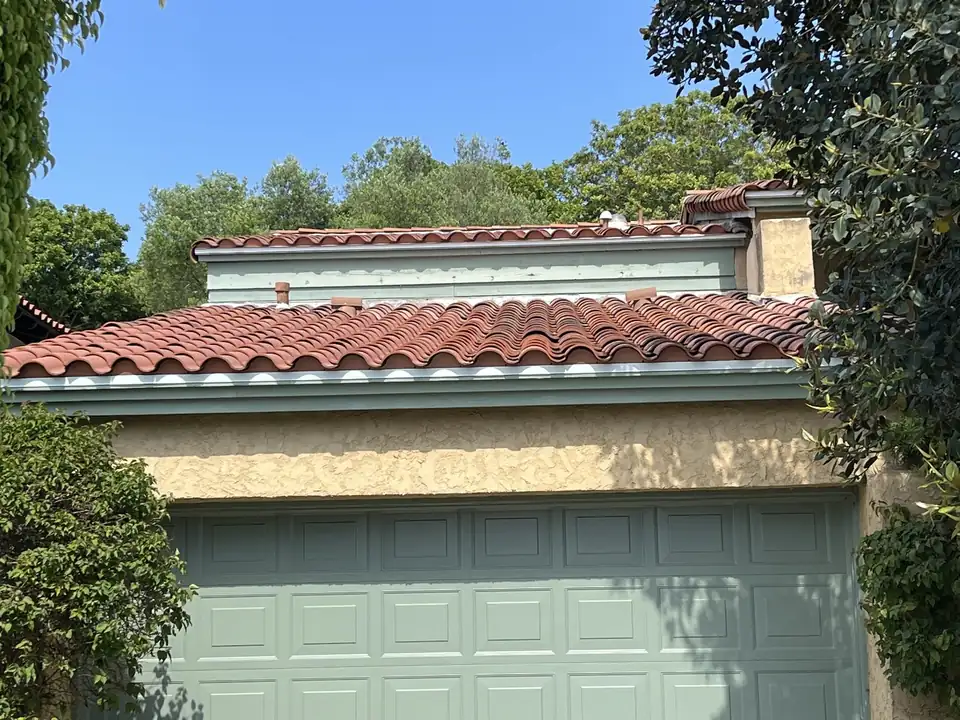
A tile roof is really two systems working together on the same slope. The tile you see sheds the weather and takes the sun, the wind and the rain. The underlayment beneath it is the layer that actually keeps water out of the house.
That difference decides what your roof needs and what it does not. Replacing a cracked tile solves nothing when the underlayment beneath it has already torn. We look at both layers before we recommend a repair, a relay or a new roof.
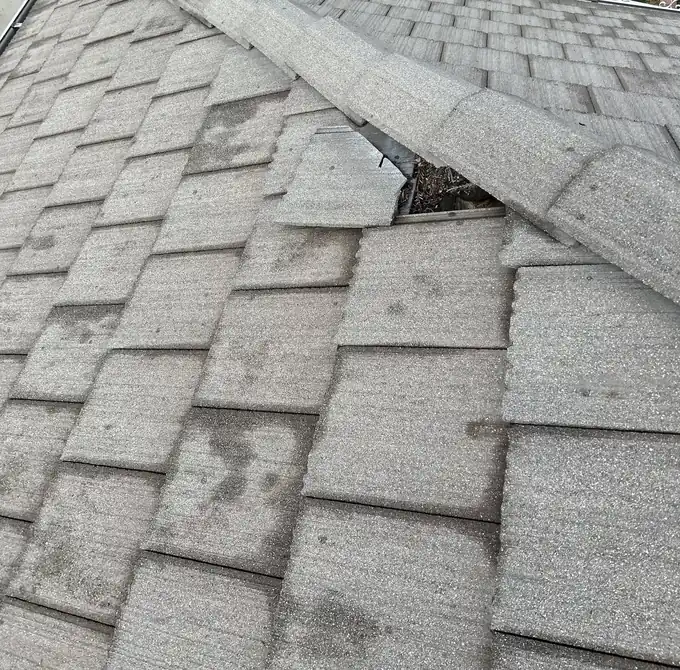
Roof tiles and the layers underneath
Roof tile is the wearing surface, the part you can see from the street. It carries water down the slope toward the edge and takes the weather all year. Water that slips past a tile lands on the underlayment, the waterproof sheet fastened to the deck.
Those two layers age on separate schedules, and one does not report on the other. Sound tile can sit above underlayment that has gone brittle where the sheets overlap. Cracked tile can also sit above underlayment that is still doing its job.
So we treat the covering and the layer beneath it as separate questions. On the tile we check for cracks, slipped pieces and worn edges at valleys and hips. Under the tile we check the underlayment, the fasteners and the condition of the deck.
Flashing needs its own look, separate from the tile and the sheet below it. It is the metal that seals joints at walls, chimneys and valleys, and those joints leak often. Cracked tile and failed flashing can produce the same ceiling stain inside.
What we find decides the scope of the work. A leak traced to one broken tile with torn underlayment beneath it is a contained tile roof repair. That work stays local to the damage and leaves the rest of the roof alone.
A roof that has gone soft across whole slopes is a different conversation. Where the deck, the underlayment and the tile have failed together, replacing the roof is the honest answer. We would rather say that at the estimate than halfway through a relay.
Some owners need the condition written down rather than summarized on a call. Buyers in escrow and insurers asking for paperwork sometimes want a documented roof inspection report. That report is a separate paid service, and it is not the same thing as our free estimate.
Tile is one part of our roofing work across Santa Clarita, alongside asphalt shingle, flat and metal systems. We do this work on houses, and also on commercial and multi-unit buildings that carry tile. The building type changes access and staging, but the two layers we check stay the same.
Many of these calls start with a ceiling stain and the fear that the whole roof has failed. Sometimes it has, and sometimes the tile is fine while the real work sits underneath it. We would rather explain the difference on the phone than sell a roof nobody needs.
Repairing damaged or slipped tiles
A slipped or cracked tile is worth handling before the rain returns. Resetting or replacing the piece is quick work when the layers below it are sound. What those layers look like is the part worth checking.
So a tile repair starts with three questions we ask on every roof. Is the covering damaged, is the flashing still sealing, and has the underlayment torn near the opening? The answers can point to very different amounts of work.
Swapping a tile does not fix a leak that started somewhere else on the roof. Water can enter at a wall joint, run along the underlayment, and show up several feet away. We follow that path before we price anything.
Our repair method on tile is simple to describe, and it runs the same way each time. We lift a section of tile, sometimes 25 to 100 square feet, and stack it aside. Then we strip the underlayment in that area, check the wood, and rebuild the section.
Some repairs stay small and stop at the edge of the damage. A few tiles, a length of flashing and a patch of new underlayment can settle a contained leak. Others grow once the tile is up and the decking underneath turns out to be soft.
Decking is the structural board layer under the covering, and it holds the whole roof up. Rot there is the most common change order on tile work. We raise that possibility at the estimate rather than after the tile comes off.
When a tile roof is actively leaking, call and we will get someone out. Same-day or next-day dispatch on leak calls is something we offer, depending on the day's schedule. What the visit produces still depends on the roof, the weather and the parts the repair needs.
Two-story roofs and steep slopes change the work before anyone touches a tile. Access, staging and safe footing all take longer, and the estimate has to reflect that. We also look at the ground around the house, since lifted tile has to be hauled off.
Call (661) 367-8211 and describe what you are seeing on the roof. The estimate is free, and we can size a roof from satellite imagery before anyone climbs on it. We still adjust on site when the roof shows something the image could not.
Cost on tile work follows a short list of drivers rather than a flat rate. Naming them is more useful than a published price that would not survive the first site visit. These are the points we weigh when we price tile work on a Santa Clarita roof.
- Roof size, measured in squares, where one square covers 100 square feet
- The number of stories and how hard the roof is to reach safely
- The pitch, which changes how the crew works and where tile can be stacked
- How much tile has to come off and go back on
- Whether rot shows up in the decking once the tile is lifted
- Which material the roof carries, and whether matching pieces can be sourced
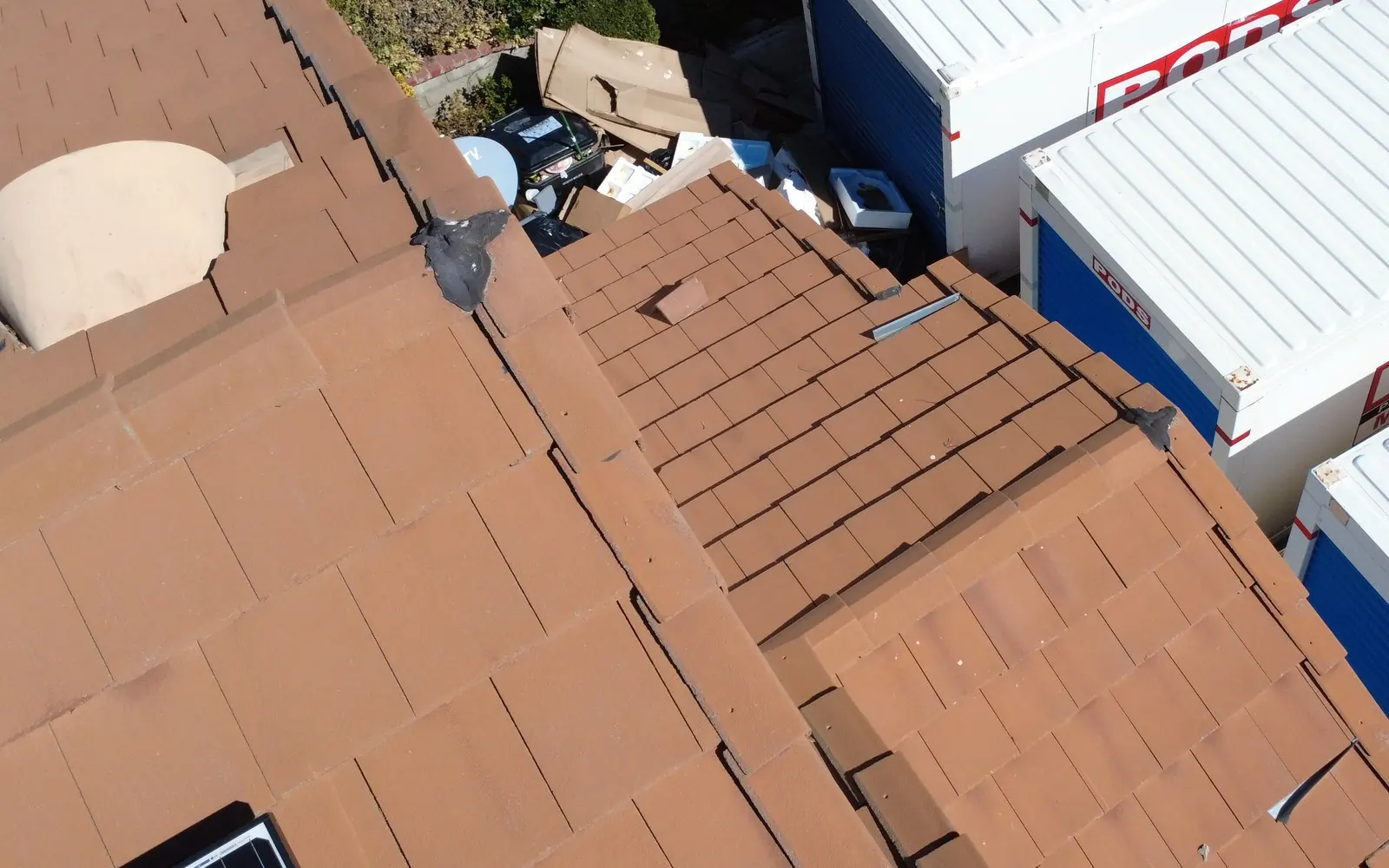
Tile lift and relay
Lift and relay is the tile version of a re-roof, and it keeps the tile you already own. We lift the tile off, replace the underlayment and any bad decking, then restack the same tile. The covering stays and the waterproofing underneath is new.
Reusing sound tile takes the cost of a new covering out of the job. That is why we raise it before anyone assumes a full tear-off is the only route. Whether it suits your roof depends on the tile, the deck and what we find once the tile is up.
A relay is not a full roof replacement, and the paperwork should never blur the two. One reuses your covering over a new waterproof layer. The other strips the roof and builds a new assembly from the deck up.
Removing and assessing the existing tile
We lift the tile in sections and stack it where it will not slide or overload one spot. Sorting happens while we lift, because some pieces come off clean and some are already cracked. Anything unsafe to reuse goes aside, and we count what has to be replaced.
Breakage is part of this work, and we price for it instead of pretending otherwise. Our estimates carry an allowance for broken tile so the figure is not a surprise later. Wood damage past its own covered amount is priced separately, and the estimate says so.
Matching is the other question we answer roof by roof, with the pieces in hand. Some profiles and colors can still be ordered and some cannot, which changes how we use salvaged pieces. Salvage from a back slope can cover gaps on the elevations people actually see.
A relay does not renew the tile itself. Pieces that are cracked or flaking go in the discard pile, and replacements fill those gaps. We count those pieces as we lift them, so the tile allowance fits the real roof.
Underlayment and deck work
With the tile off, the roof stops hiding what it has been doing. We strip the old underlayment down to the deck and look at every board we uncover. Fastener lines and sheet overlaps get a close look as the old material comes off.
Decking is the sheathing that carries the roof, and rot in it gets cut out and replaced. Soft boards near valleys, chimneys and old leak points are what we look for. Damaged deck or framing is repaired before any new roofing goes down.
New underlayment then goes across the clean deck in courses that overlap each other. Flashing at walls, chimneys and valleys gets attention at the same time, since the tile is already off. Then the original tile goes back on and the roof looks much as it did.
A relay is not the right answer for every tile roof we look at. Where the tile itself has failed broadly, or the structure needs more than board replacement, we say that plainly. That call belongs in the estimate, with the roof actually in front of us.
Clay, concrete and slate roof considerations
Tile is a category of roofing, not a single product off one shelf. Clay tile is fired clay, concrete tile is cast from a cement mix, and slate is quarried stone. We identify what is on the roof before quoting, because each one is sourced and handled differently.
Clay tile comes in profiles that vary by maker and by era. A match is a sourcing question first, so we look at profile and color before planning replacements. Where the same piece is no longer made, salvage from your own roof becomes the plan.
Concrete tile is cast rather than fired, and its profiles and colors also vary by manufacturer. Weathering changes how a roof reads from the ground, so new pieces beside old ones can look different.
Slate is stone, and we treat it as its own material rather than a version of tile. It sits inside our tile scope, and we plan the handling and the sourcing separately. What we can reuse still depends on the condition of the pieces we lift.
What stays the same under all three is the assembly beneath the covering. Clay, concrete and slate roofs all depend on underlayment, flashing and sound decking to stay dry. So a slate roof and a concrete tile roof can need the same underlayment work for the same reason.
What changes is the covering itself: how pieces are sourced, how they are handled, and what happens when one breaks. Those differences show up in the labor and in the tile allowance rather than in some separate kind of roofing. So we plan and price around the tile that sits on your roof today.
If you are not sure what is on your roof, describe it on the call. Shape, color and the way the pieces overlap help us narrow it down before an estimate. We confirm the material on site, where we can put hands on a piece.
Some tile roofs include a low-slope section over a porch or an addition. That area needs its own waterproof membrane and a clear path for water to drain. We use torch-down modified bitumen there, which is a heat-applied flat-roof system.
Planning tile roof work in Santa Clarita
Tile work in Santa Clarita runs through the City's Building and Safety process whenever a permit is required. We help property owners pull the required roofing permit from the City. Whether your particular job needs one is a question for the City, not something we decide from here.
The City permit center routes online applications, residential guidance and questions to Building and Safety. That is where to confirm what your address and your scope actually require. Bring your address and your planned scope when you contact them, since both change the answer.
Code editions change on a date, and the date matters when you plan work. Santa Clarita applies its 2025 code edition to submissions made on or after January 1, 2026. Submissions filed before that date follow the 2022 codes, which the City's building codes page lists.
The current code also shapes how a tile job is sequenced. A reroof inspection follows removal of the existing layers. Damaged deck or framing has to be repaired before the new roofing goes on.
Site conditions vary from parcel to parcel, and the City says so directly. Its building and safety pages list fire hazard, flood and topography among the conditions to check. The City points owners to its maps and to field verification, so we confirm the actual property.
We keep a Santa Clarita checklist for tile underlayment and deck inspection. It covers what we look for once the tile comes off and how the City's inspection steps fit in. Read it before your estimate if you want to know what we will be looking at.
The first thing we ask for is the property address and what you are seeing. It lets us pull up the roof, measure it, and talk about scope before anyone drives out. From there we can book a visit or answer what you need on the call.
Timing is worth thinking about before the season turns. Roofing demand across this market climbs once the first rains arrive in the fall. Opening a roof is easier in dry weather, so earlier planning leaves more room.
A full roof replacement carries our 10-year workmanship warranty. Repairs and relays are quoted on their own terms, so ask what your estimate covers. The estimate spells out the scope, the tile allowance and the way we handle wood damage.
Questions we hear about tile roofs
Can the tile on my roof be reused?+
That depends on the condition of the pieces, which we sort as we lift them. Tile that comes off clean goes back on, while cracked or fragile pieces are set aside. Breakage is normal on this work, so our estimates carry an allowance for replacement tile.
What does lift and relay mean?+
It means lifting your tile off, rebuilding what sits under it, then restacking the same tile. We strip the old underlayment to the deck, repair rotted decking, and lay new underlayment. The covering stays yours and the waterproofing is new, which is a different scope from a full replacement.
What do you find under the underlayment?+
The decking, also called sheathing, is the board layer the whole roof is fastened to. We look for soft or rotted boards, especially near valleys, chimneys and old leak points. Damaged deck or framing is repaired before new roofing goes down, so that work comes first.
Tell us what your tile roof is doing and we will take a look. Call (661) 367-8211 for a free estimate on a repair, a relay or a replacement. You can also send the details through our contact page if writing suits you better.
Santa Clarita Roofing Contractors is a division of Home Vision Remodel. Our license is CSLB #1112525.