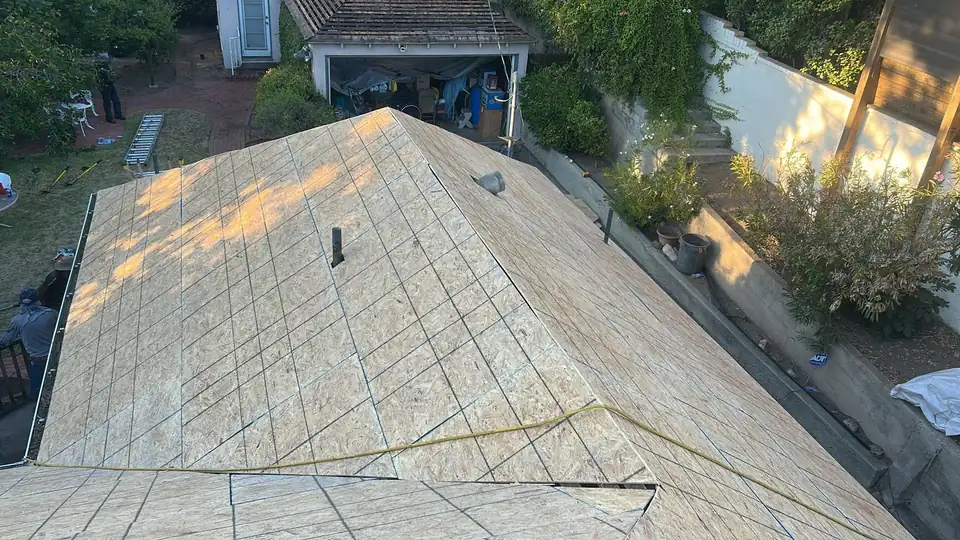
TPO is a single-ply roof sheet made for flat and low-slope roofs. We weld the seams with heat so the sheets act as one skin. Some buildings suit it well, and others do better with another flat roof system.
We install TPO, and we repair TPO roofs that are already on a building. Tell us what the roof has to do, and we will look at it and price the work. The estimate is free.
TPO for a low-slope roofing project
We install TPO on flat and low-slope roofs, and we service membranes that are already in place. TPO is one system we offer, and it is not automatically the right answer for every building.
Low slope means the roof sits nearly flat, so water travels slowly toward the drains. That is why we examine drains, slopes and edge details carefully before we price a membrane.
Before we quote a TPO project, we ask what sits on the roof and how water leaves it. Vents, pipes, curbs and mechanical units each create detail work where the membrane meets them. Roof size, the number of floors and safe access also influence the final scope.
TPO is one part of the general roofing work we do across Santa Clarita. That work ranges from small leak repairs to complete replacement roofs on a property.
Multi-unit and property-managed buildings fall under our commercial low-slope work, and the assessment follows the same path.
When the existing covering comes off and a new membrane goes on, that project is a roof replacement. A TPO installation follows the same sequence as any other covering we strip and rebuild.
Our estimate for that work is free, and a written report remains a separate paid service. Escrow files and insurer requests fall under our roof inspection work, where the fee depends on the roof.
A roof with heavy foot traffic needs designated walk paths planned before the membrane goes down. We ask who regularly reaches the roof and what equipment they service while they are up there.
A TPO roof still needs regular attention from the owner after our crew leaves the property. Clearing drains and checking seams after a storm catches minor problems before they spread further.
The TPO membrane and its roof details
The membrane sheet itself is the straightforward part of a TPO roof installation. Seams, edges and every pipe or curb penetration are where the demanding work actually sits.
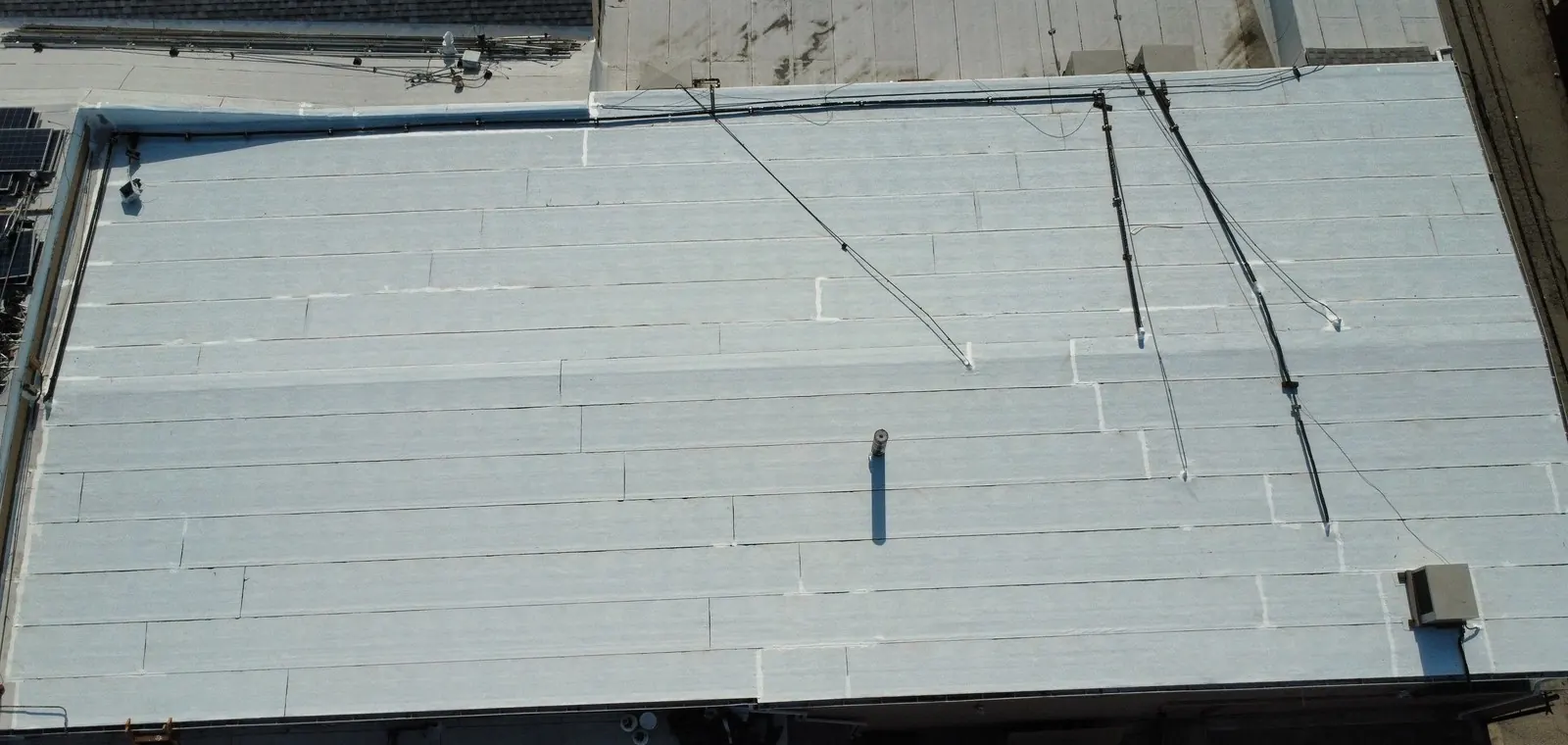
We weld seams with controlled heat so two separate sheets fuse into one solid piece. A weld that runs too cool or too hot will not hold, so we test continuously.
We give seams close attention because they run the entire length of a low-slope roof. Mechanical units sit on curbs, and the membrane has to turn upward and seal against them.
Pipes, drains, vents and unit curbs all break the plane of the roof. We flash each one with matching material, and we shape the corners by hand. Those corners take time, and they are worth it.
We fasten or bond the membrane to the deck below, and that deck has to be structurally sound. Santa Clarita's roofing code requires that damaged decking or framing be repaired first. We plan for that possibility, because rot can hide beneath the original covering.
A low-slope roof still has to drain. We look at drains, scuppers and the low spots where water stands after rain. Water that sits for days points to a drainage problem, not a design feature.
A scupper is an opening at the roof edge that releases water over the side of a building. Blocked drains and scuppers turn a minor seam problem into an interior ceiling leak.
Metal at the edge and at every wall joint takes as much care as the open field. The field is the wide area between those details, and flashing is a leading place for leaks.
A recover leaves the existing covering in place and installs the new roofing directly over it. The city's reroof inspection comes after the old layers come off, or before new roofing on a recover. We build that required step into the project schedule.
Assessing a TPO roof for repair
Many calls about a flat roof begin with a discolored stain on an interior ceiling. Water can enter well away from the visible spot inside, so we trace the path backward.
We examine the seams first, then the flashing at walls, curbs and drain openings. Foot traffic near rooftop equipment leaves scuffs and punctures, so we check those walking paths.
We also ask whether the leak follows every rain or only the heaviest storms. That pattern usually points us toward the seams, the drains or the flashing.
Old patches tell us plenty, including which material someone applied and whether it actually bonded. We ask what went onto the roof before, and any paperwork you kept helps our diagnosis.
A repair patch has to match the existing membrane and bond securely to that surface. We never assume that a patch or a coating will hold until we examine the roof.
Roofs carrying several old patches can hide more than one active leak path. We continue searching after we locate the first problem area on the membrane.
We check the deck for soft spots and locate moisture trapped beneath the membrane. If the membrane has failed across the roof, a repair only buys a little time. We will say that plainly rather than sell you an unnecessary patch.
Small repairs are welcome, and leak work remains a regular part of what we do. Our approach to leak and roof repair work stays the same on a TPO membrane.
Tell us where the water appears inside and when it typically shows up. That description gives us a useful starting point before we get onto the roof.
After we walk the roof, we explain the repair scope and what it will not fix. If a complete new roof makes better sense, we price that option so you can decide.
Comparing TPO with modified bitumen
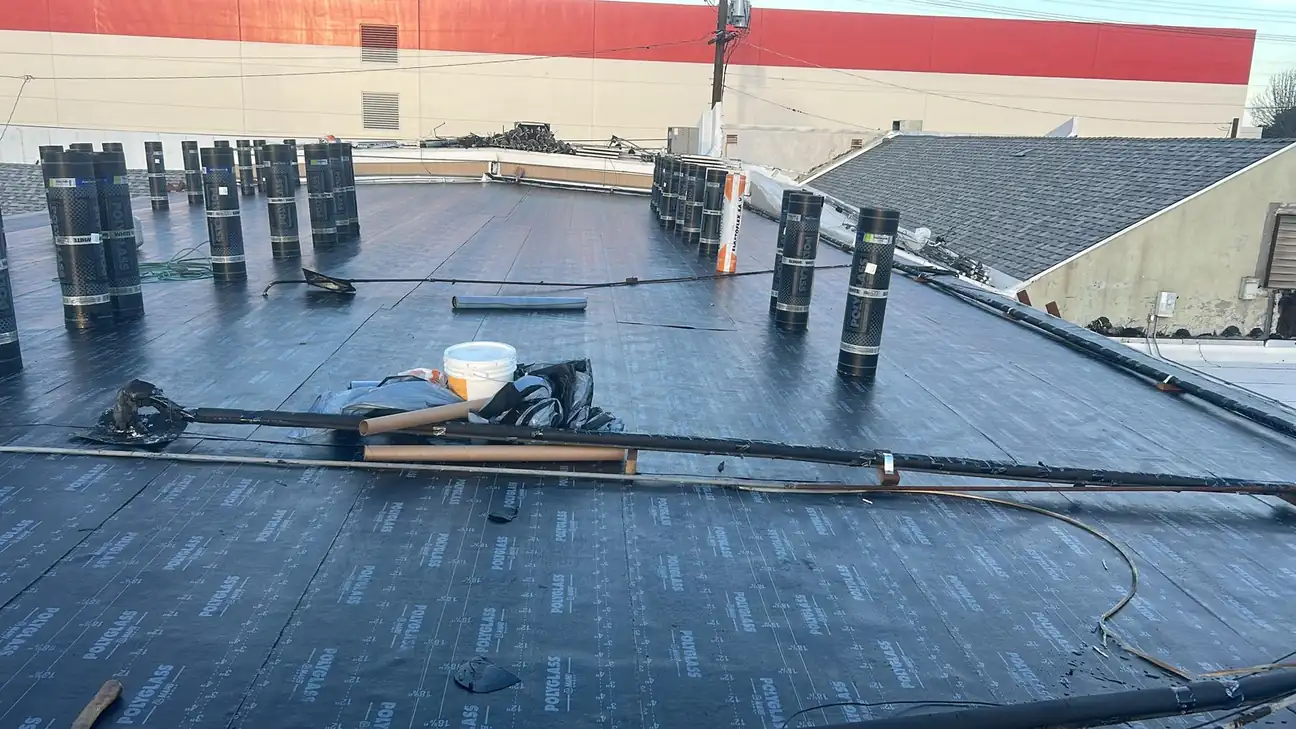
Our usual low-slope system is torch-down modified bitumen rather than TPO membrane. Torch down means we melt the material into position with heat instead of nailing it.
Both systems rely on heat and a clean bond, and both perform well on a flat roof. The sheet material and the finished top surface create the main practical difference.
The cap sheet we favor is Polyglass Polyfresko G, manufactured for low-slope roofs. A cap sheet is simply the top layer that you see and walk on. Polyglass publishes the product sheet for Polyfresko G, including its heat-welded application method.
We do not rank one system above the other for every building in Santa Clarita. The right choice comes from the condition of the actual roof in front of us. Slope, drainage, rooftop equipment and how people use the space all influence the decision.
Who repairs the roof later also matters when you compare the two systems. A weld repair on either system needs matching material and the correct heat equipment.
What already sits on the deck can eliminate one option before we begin. Existing layers, worn flashing and a soft deck all change the installation plan.
Local code also sets a minimum fire rating for any new roof covering. Mapped fire hazard zones add further requirements, and the city publishes its current building code criteria online.
We quote either system when both suit the roof, so you can compare them directly. You can read more about torch-down and the other flat roof systems we install.
Planning the TPO roofing scope
We plan a flat roof job better when we know how we can reach it. Floors, roof access and space to stage material all shape how we work.
We ask how many layers sit on the roof now and what material went on last. Old invoices, permit records or a product name eliminate a considerable amount of guesswork.
Tear-off means stripping the existing covering completely down to the structural deck. A recover installs the new roofing over the old one, and the roof has to qualify. We evaluate the deck and the existing layers carefully before we choose between them.
Repair and replacement remain separate projects, and we back a full roof replacement with a ten-year workmanship warranty. That warranty covers our workmanship on a complete replacement, not on an individual repair.
Our estimate lists the scope we plan to complete and the areas we cannot see yet. Rot in the decking is the most common change once the old covering comes off.
Cost follows the individual roof. Size in squares, building height, access and the material under the covering all move the price. A square equals one hundred square feet of measured roof area.
We help property owners pull the roofing permit that the city requires for this work. We cannot promise approval or timing, because the city's permit center handles those applications.
Santa Clarita applies its 2025 code edition to submissions made on or after January 1, 2026. Earlier submissions fall under the 2022 edition, so the actual filing date matters for your project.
If you are building, send the complete plan set and we will price the roof scope. New construction starts from the drawings rather than from a walk on an existing roof.
A project scheduled several months out is still worth an early phone call. We would much rather hear about the roof early than discover the problem late.
We work across Santa Clarita, including Newhall, Valencia, Saugus and Canyon Country. Call us with the property address, and we will look at the roof and give a free estimate.
Common questions about TPO roofing
Do you install TPO roofs?+
Yes, we install TPO membrane and repair existing TPO roofs that are already in place. It is one of the low-slope systems we offer, and torch-down modified bitumen is the other. We will tell you which one suits your particular roof, and the estimate is free.
What do you check before a TPO repair?+
We start at the seams, the flashing and the locations where pipes and equipment penetrate. We also check old patches, blocked drains and the condition of the deck underneath. We never assume that a patch will hold until we examine the roof.
How do you choose a roofing system for a building?+
We consider slope, drainage, rooftop equipment and how the occupants use the building. The deck, the existing layers and local code requirements narrow the selection further. Then we price the systems that fit the building, and you choose from there.
If you have a flat or low-slope roof in Santa Clarita, we can look at it. Call (661) 367-8211, tell us what the roof is doing, and we will give a free estimate.
If a call is not convenient right now, send us your details and we will respond. We work under CSLB #1112525 on the roofing projects we complete.
Santa Clarita Roofing Contractors is a division of Home Vision Remodel.